Come along tomorrow if you can. The gallery opens its doors on a roomful of timber and drinking in the afternoon is a better afternoon with people in it: 14:00. 41 Smithton Grove, Ocean Grove.
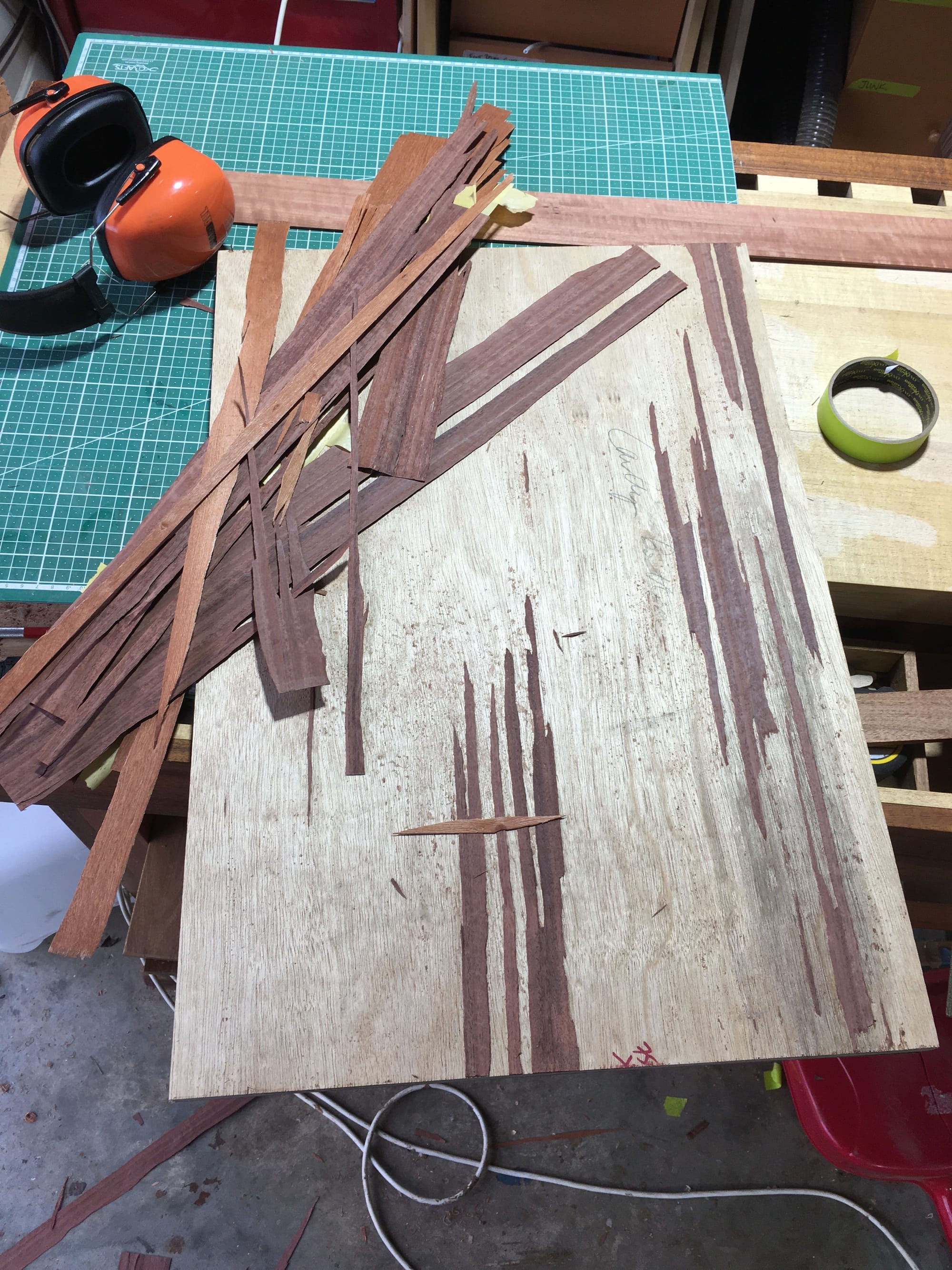
For the first time, glue let go of the last structural components of the desk. It spoiled the day — just the day, mind, and a few parts I'll have to make again; the desk itself is unharmed. But there's nothing so costly in this "business" as doing a thing twice, and this twice will run me near two thousand dollars and more pride than I'd budgeted.
But the desk is coming along handsomely, glue failures and looming destitution aside:
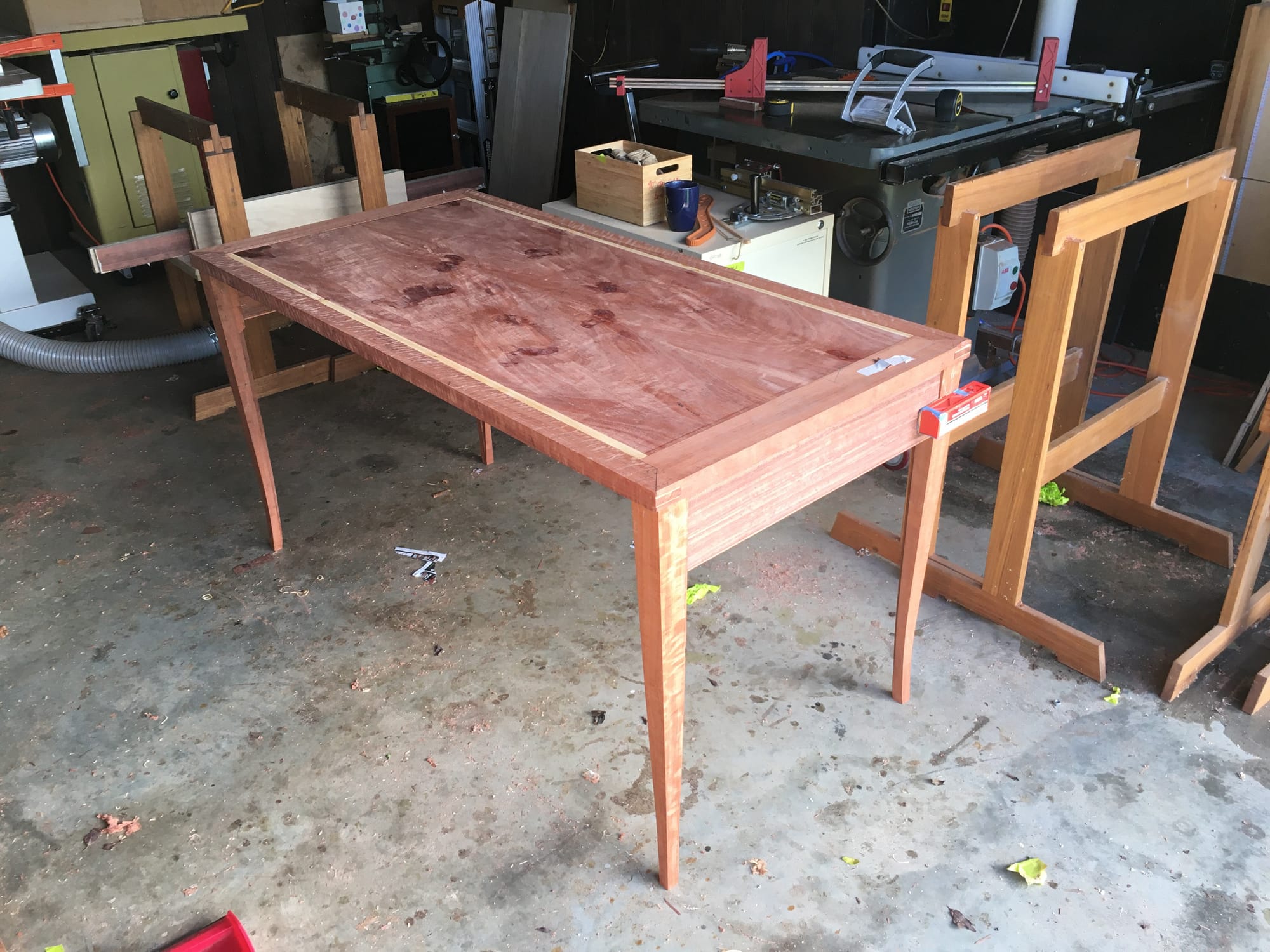
When I drew the desk up, the construction I had in mind ran close to a desk of David Savage's, out of The Intelligent Hand (which I recommend without reservation), it too carrying a great unsupported span. But Savage's also held a good deal of MDF, and epoxy, and slip tenons. I am no stranger to any of the three; only I am grown weary of the whole glue-and-wait, glue-and-wait business, and a slip tenon is very nearly always the poor relation of a proper one.
A maker whose name I have mislaid once said he reckoned a piece of furniture ought to last at least as long as the tree it came from was alive. I like that. To my mind it means the joinery has to hold without leaning on glue at all, for the glue will let go a good few centuries before the desk has grown as old as the Huon that stands inside it. I had been turning these thoughts over before the glue failed this morning; now I am EXTRA motivated to be quit of it.
Savage's desk in The Intelligent Hand drew much of its rigidity from the drawer cavities, which he built as an open-ended box of MDF and screwed up under the top. His work is staggering to look at, and yet I cannot help feeling — rightly or wrongly — that the method is a little... insufficient.
Seeing as I must remake the cavities in any case, what I have settled on is a compromise: half of it the corner I have built myself into, half of it the way I would sooner work if no compromise were demanded of me and the budget weren't taking the decision out of my hands. A half-traditional frame will lock to the top with sliding dovetail keys (and as if by magic, the battens I'd already fixed sit exactly where the keys want them). The drawer cavity will tenon into the rear stretcher. The drawers themselves will depart from my usual British method — dovetails and a piston fit — and follow instead an adaptation of the NK drawer, sliding dovetails the whole way round, which does away with any reliance on glue, and which, in theory at least, will take a good deal less time than the British way. Every tenon that can be wedged, keyed, or pinned, will be.
I'm happier with this compromise than I currently am with Titebond.
It has been an unproductive week. A great deal of umming and ahhing and scratching myself and wondering what to do next, when I ought simply to have been getting on with the work. And then, right as a tool was about to be turned on, a neighbour came round after a favour, and you can't well say no to a neighbour, so the tool went quiet and the favour got done. And as soon as that was done, another neighbour came round after a favour. Fine thing, being wanted. Hard thing, finishing anything.
Here's to hoping for a better week ahead.
— Jake
Join the conversation