One of the aspects of fatherhood I had failed to fully anticipate was just how much someone else's bowel movements would dictate my schedule. Volume, consistency and frequency have become of great concern. We have been visited by the poo fairy and the middle child flows forth like a furious fondant fountain. This has freed me from the torrid business of making a living for a few days and so I've been able to indulge myself in podcasts and overthinking between bouts of carpet scrubbing and disinfecting the ceiling.
I had thought about turning this into a giant essay but honestly I don't have it in me. Like the middle child I don't have much of anything in me at the moment. (This is untrue, but too good a joke to pass on. I also haven't had to clean the ceiling. Yet.)
In a video about film photography Daniel Milnor describes people who hark on about film photography being "real" photography, which sounds a lot like woodworkers who say hand tool woodworking is the only "real" woodworking. In both cases they're more concerned with process than product, and they'll never be really good, he says, because of it. He shares a story about handing a warped, water-damaged, borderline unplayable guitar to a friend who made that piece of junk sing. When asked about the state of the instrument, the guitarist just shrugged: "Well… it matters, but it doesn't matter."
Are you obsessed with the outcome? That's the question underneath. Not: do you have the right equipment?
Nobody Cares What Typewriter You Use
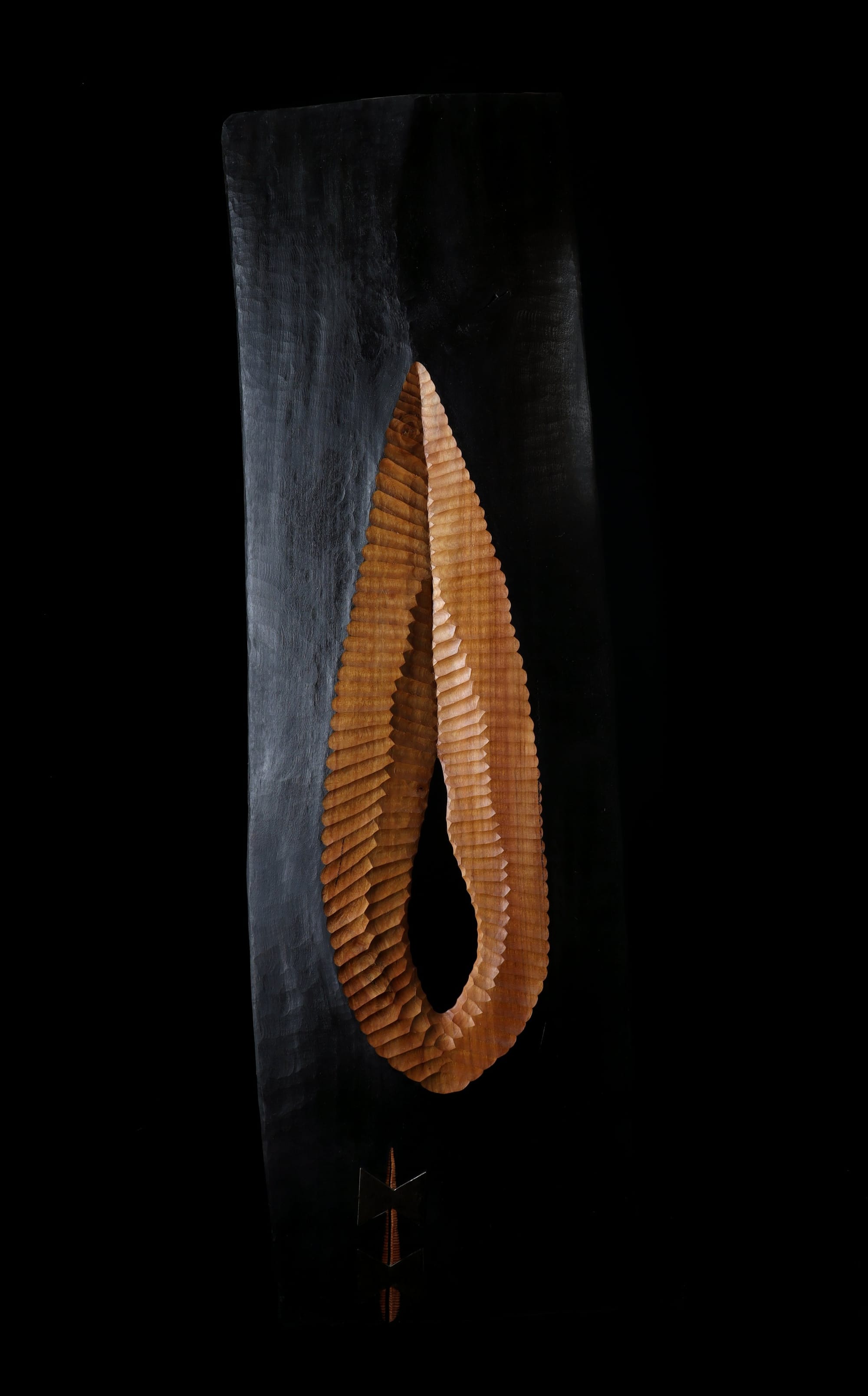
Just how precisely this overlays onto woodworking is striking. At gallery openings most other makers will ask about tools. What tools did I use to cut the marquetry, the stringing or the inlay. Really keen amateurs will ask about finish, which is promising. I have had one — one — conversation about form. With a sculptor, whose work is extraordinary.
Nobody reading Carrie cares what kind of typewriter Stephen King used. Nobody. Except wannabe writers, who for some reason sincerely believe their innate genius will be unlocked by a barely functional Underwood, always just one more purchase away from being good at something.
No buyer of furniture has ever asked, or will ever ask, whether I use a Lie-Nielsen block plane or a Veritas, and oh would I please describe the differences between the approach angles of the two. I say this as a man who has wet dreams about being able to afford Lie-Nielsen one day. I'm not above the disease, I just know the disease has nothing to do with the furniture.
The disease is everywhere. Some people literally cosplay as eighteenth-century woodworkers. There are photographers who turn up to journalistic shoots with film cameras and cigarettes hanging from their mouths, cosplaying as 1980s photojournalists. I wanted to listen to an audio narration of Joan Didion's essay "On Keeping a Notebook" while I was walking the kids around to kill time (what I've actually been doing while not scrubbing, 75,000 steps in three days) — an essay about what the product of note-taking is, about why you keep one and what it does to the keeping mind. Instead I found hours of ASMR typing videos, performative note-keeping, thirty-minute "traveler's notebook tours."
Notebook tours... for crying out loud.
In a recent substack Chris Schwarz compares bad furniture design to those hilarious antique drawings of exotic animals — the ones made by someone who had never actually seen an elephant. The artist followed the description faithfully: long nose like a snake, ears like a ship's sails, a body like an enormous grape. The drawing fulfills every rule and captures nothing. The designer who follows all the written rules on proportion and symmetry and still produces dull work has the same problem as that artist. They're obsessed with the rules of design - the process, the steps - not the product, the designs themselves. They don't have a phone stuffed with photographs of cabinets they didn't build. They don't have a crush on some form of ornament or door arrangement that lives in the back of their mind and pushes its way toward the bench.
There are thousands of images in my swipe file at this point, each one noted because something about the form caught me by the throat. A curve. A proportion. A joint expressed on the surface. All of it feeding the furniture wank bank for when I come to do my own designs.
If your browser history is stuffed with bookmarks to tools you want — if the first thing you'd do with a windfall is go and buy some equipment — your obsession going in the wrong direction.
When those windfalls have come, which they have from time to time, it wasn't spent on Lie-Nielsen. It got spent on wood. On books. I've spent almost as much on books as I have on tools, and the ratio could stand to go further.
I know what you're thinking: Jake, you're a dick. And didn't you say a few short weeks ago that the way we make things matters?
Yes, most certainly. And yes, I did.
It matters. But like the state of the instrument, it also doesn't matter. At least, not as long as the product is good.
I am guilty of my own process blind spots. I have strong opinions that certain construction methods are better than others. But when I interrogate those opinions honestly, they're more about longevity and structural quality — about whether the thing will still be the thing in a hundred years — not about anything emotional about the act of cutting a tenon by hand. Most of the time I'm battling the urge to whip out the Domino and be done with it.
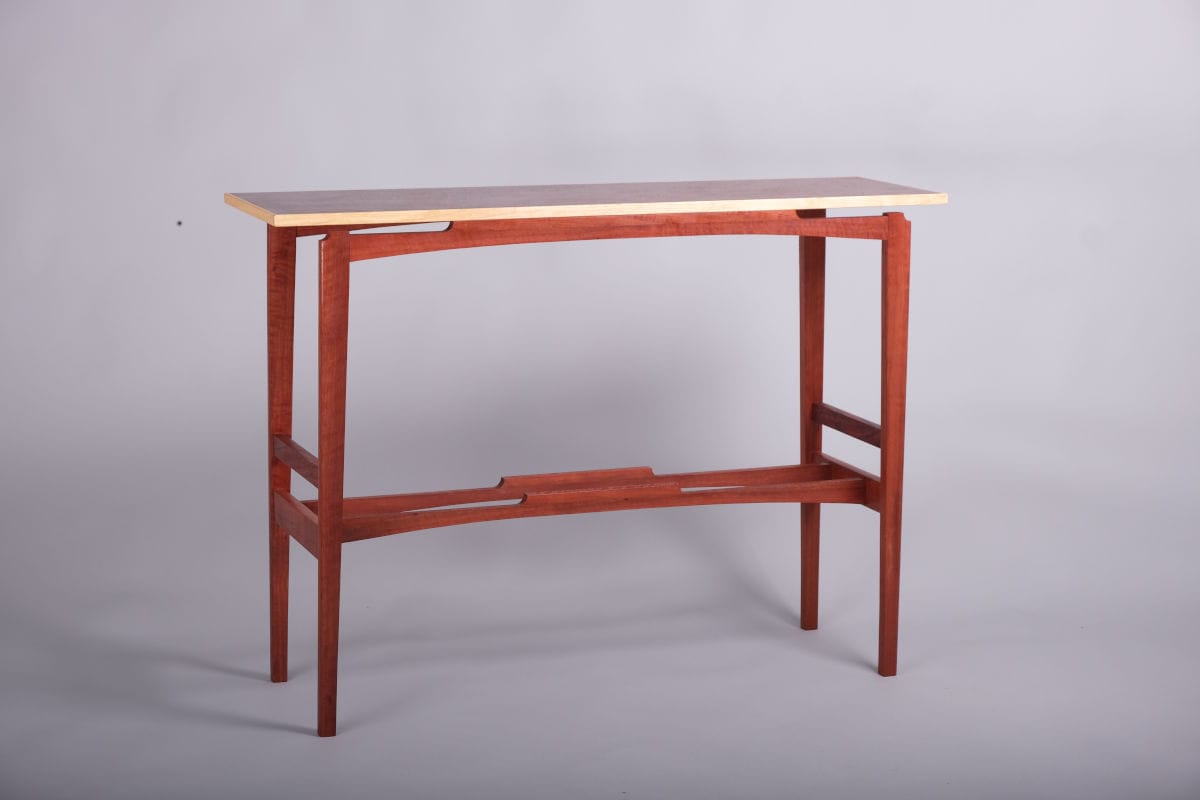
I once made three of the same hall table in two days, coming up to an exhibition. I didn't have time to think too hard and I didn't have time for "real" joinery. I grabbed the domino and a spokeshave. I rifled through the off-cut buckets looking for pieces that we already the right size. The design was rough-sketched onto a drawing of something else - no iterating drawing after drawing, no drafting, no measurements.
The product was the thing I'm least proud of in terms of construction. It is also my best-selling design by far. The design is the most spontaneous and most elegant thing I've produced.
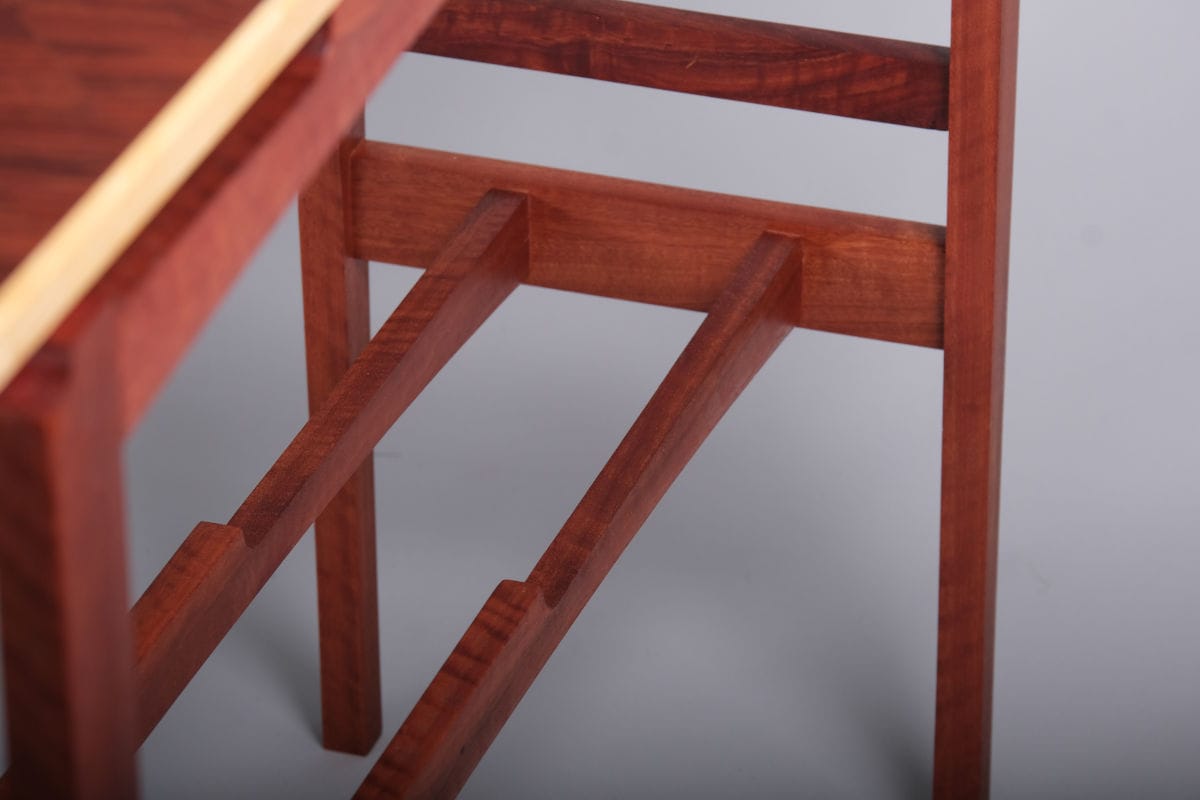
When forced to strip away the process all that was left was the idea. And the idea, unburdened by the elaborate procrastination of process, turned out to be the most popular thing I've made.
I don't want to make out that my furniture is the best, or anywhere close to it. But it might be, one day, if I stay obsessed with the product and not the process. With the form and not the formation.
So what does any of this have to do with gastro, you ask?
Because when people start talking to me about tools, my gut response is to spray the ceiling.
Join the conversation