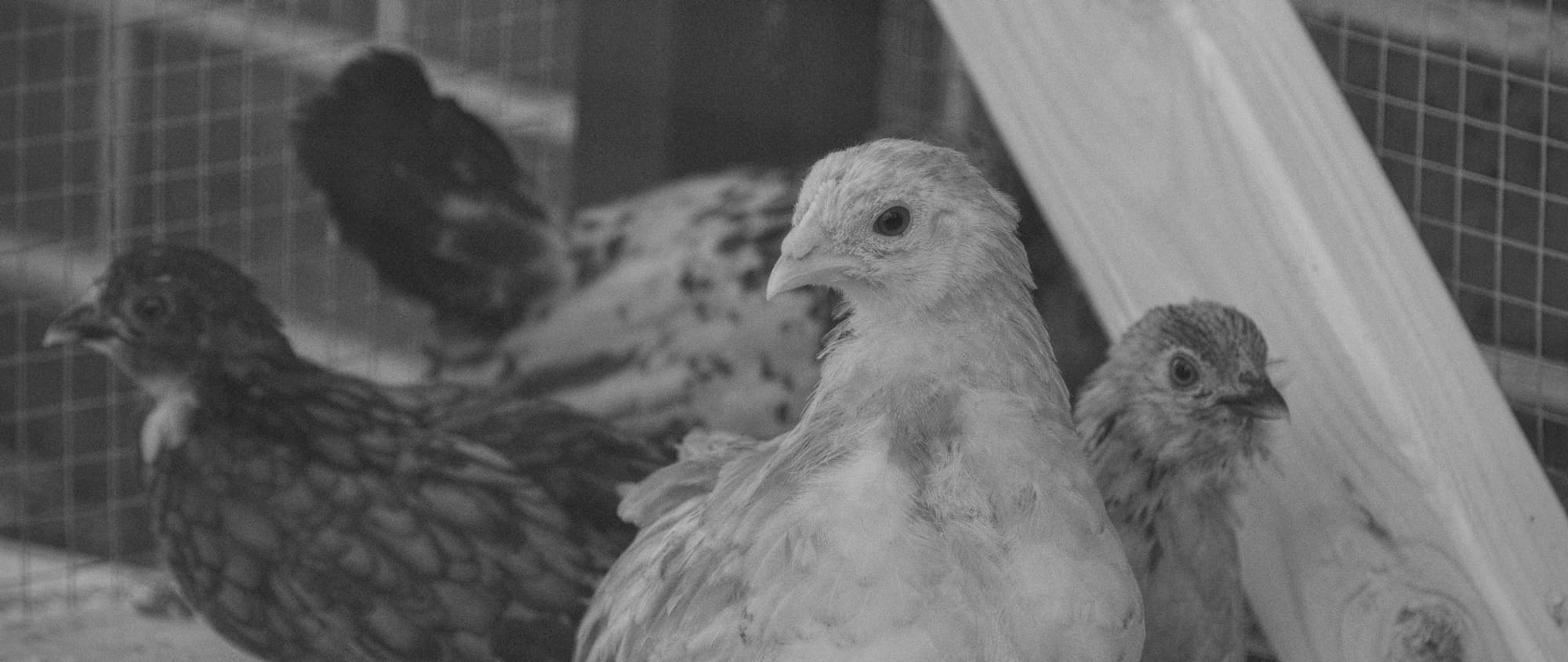
Mirabelle, our Maran, died on Good Friday. She was a pullet and hadn't laid a single egg yet, which makes the whole thing feel less like losing a productive member of the household and more like losing a promising intern on her first week. She'd been off for a day or two; slow in the mornings, disinterested at the feeder, spending too long in the corner of the run doing nothing which, now I write it down, sounds disconcertingly like how I behave most days.
I am not a veterinarian, nor a competent diagnostician of poultry. My medical knowledge extends to googling symptoms on my wife's phone in the driveway because the shed has no reception, then walking back to the patient with a confidence I have not earned. Monique asked me what was wrong with her. I said she appears to be unwell. She asked me what I was going to do. I said I would monitor the situation, which is what men say when they intend to do nothing and hope the problem resolves itself.
When monitoring failed to produce a miracle, we escalated to intervention. I mixed a concoction of sugar and egg yolk and attempted to administer it with a syringe. She was placed in a shoebox with a microwave wheat bag for warmth, the whole arrangement looking like a very small and poorly funded intensive care unit. I sat with her for a while. She looked at me with one eye, the way chickens do when they are making a judgement about you. I imagine it was not a favourable assessment.
When informed of her condition the children did not look up from their activities. Or register her existence in the first place, probably.
She died sometime in the small hours of Friday morning, apparently having decided that if Christ could manage it on a Good Friday then so could she, though with considerably less fanfare and no promise of a sequel.
I will admit I held out a flicker of hope over the weekend. Easter is Easter, after all, and stranger things have happened — though not, it must be said, to chickens. By Sunday morning the theological implications had failed to materialise and the practical ones had become urgent. The pong was beginning to make itself known.
There is a ceremonial quality to disposing of a backyard chicken that nobody prepares you for. You can't just toss her in the bin like potato peelings. Or rather, you can, and I did, but you feel the weight of it. She had a name. She had a personality, which consisted mainly of being furious about everything, but it was hers. She hadn't yet earned her keep in eggs but she had already established herself as the most belligerent animal on the property, which in a household with small children is no small feat.
The bin goes out on Monday. The remaining hens have not, as far as I can tell, registered any grief whatsoever. They have already occupied her preferred corner and seem, if anything, slightly cheerful about the reduced competition. I have learned something from this, though I am not sure what. Perhaps it is that chickens are better at death than we are. Perhaps it is that a life spent being furious and producing nothing yet is not a bad life at all — she was still becoming something, which is more than most of us can say with any certainty. Perhaps it is only that the bin collection is on Mondays, and the world does not pause for a Maran who never laid an egg.