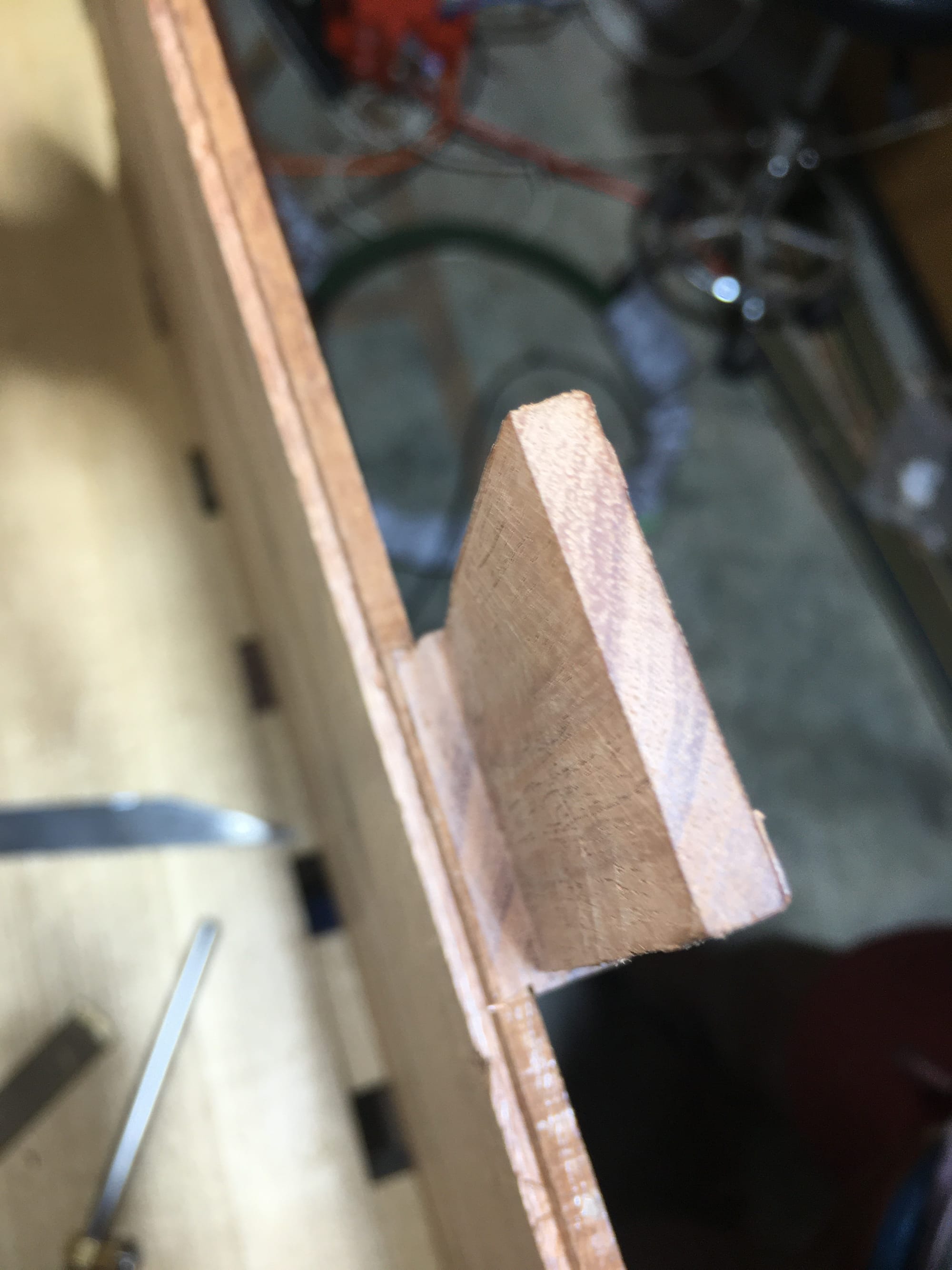
Chinese panels - whether that's tabletops, doors, side panels in cabinets or anything else you can think of - are all constructed the same way. A thin panel floats in a groove in a mitred frame, supported by dovetailed and tenoned battens.
Battens are not unique to Chinese furniture, but dovetailing and tenoning them seems to be. And they require absolute precision. There is zero wiggle room.
I was very nervous about the amount of time I was going to spend fettling and faffing and fartarsing around.
The sequence: mortise the frame members for the brace tenons. Fit the panel. Line it up exactly where it needs to sit for the life of the piece — because once the brace goes in, there is no wiggle room. Cut the brace tenons at exactly the right height to meet the top of the dovetail trench. Too thick, the panel won't seat in its groove. Too thin, the brace sits loose and does nothing but rattle annoyingly. Mark the brace position on the underside of the panel. Perfectly. Cut a dovetailed trench into the panel on the router table, and hope the panel is square enough (i.e. perfectly) that both ends of the brace land where they're meant to (i.e. perfectly). Then cut the corresponding dovetail on the top of the brace. At least this step is easy: same bit, same table, same setting as the trench.
Then... fettle. Figure out what went wrong and where, and how you can fenangle it to fit well enough it will still function but loose enough that it will all go together.
Except...
No fettling. Both braces went into their trench snugly but movable, both braces went into their tenons firmly but hand pullable, both panels seated in their grooves perfectly, and both frames went together with no fuss and no gaps.
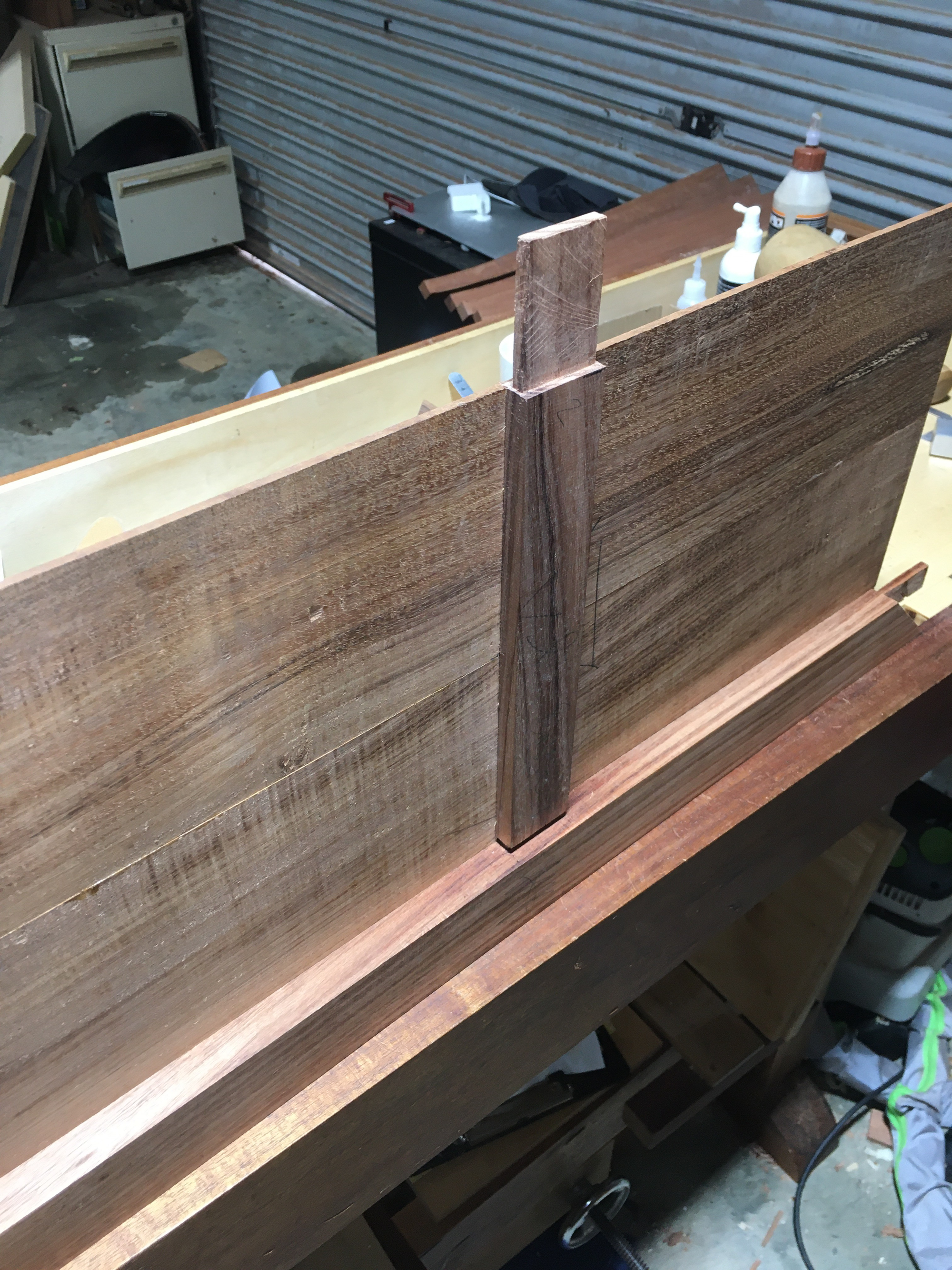
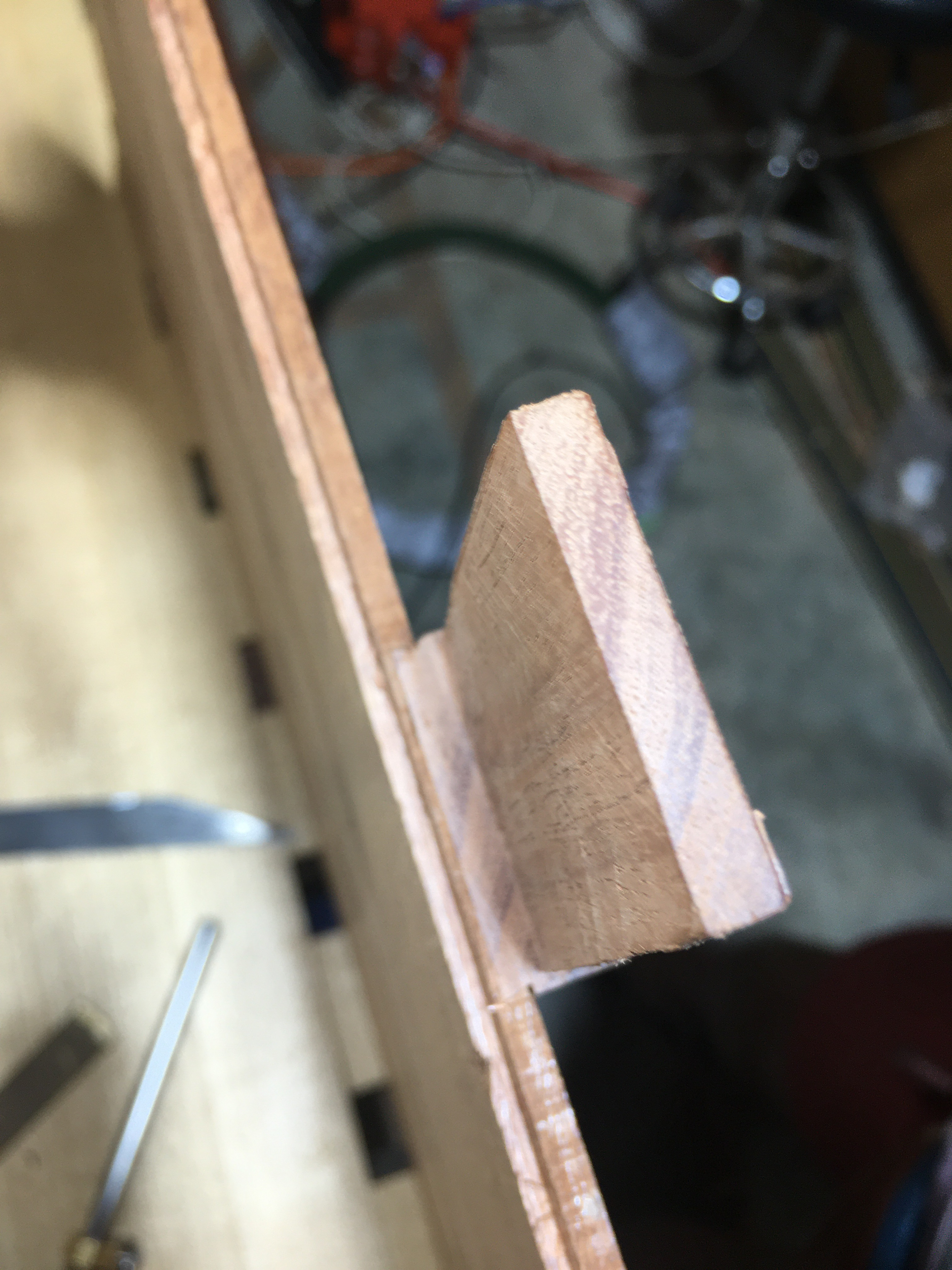
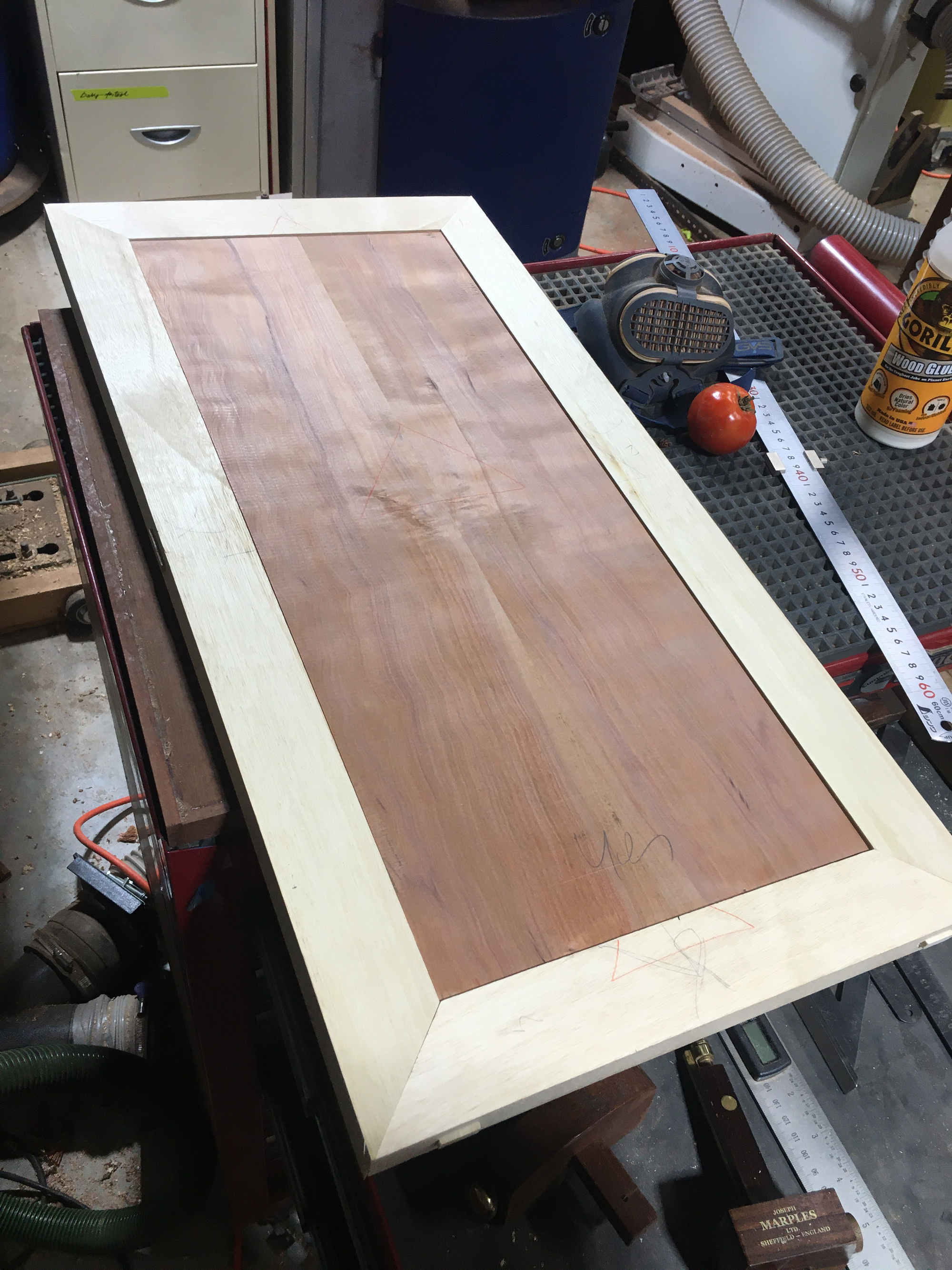
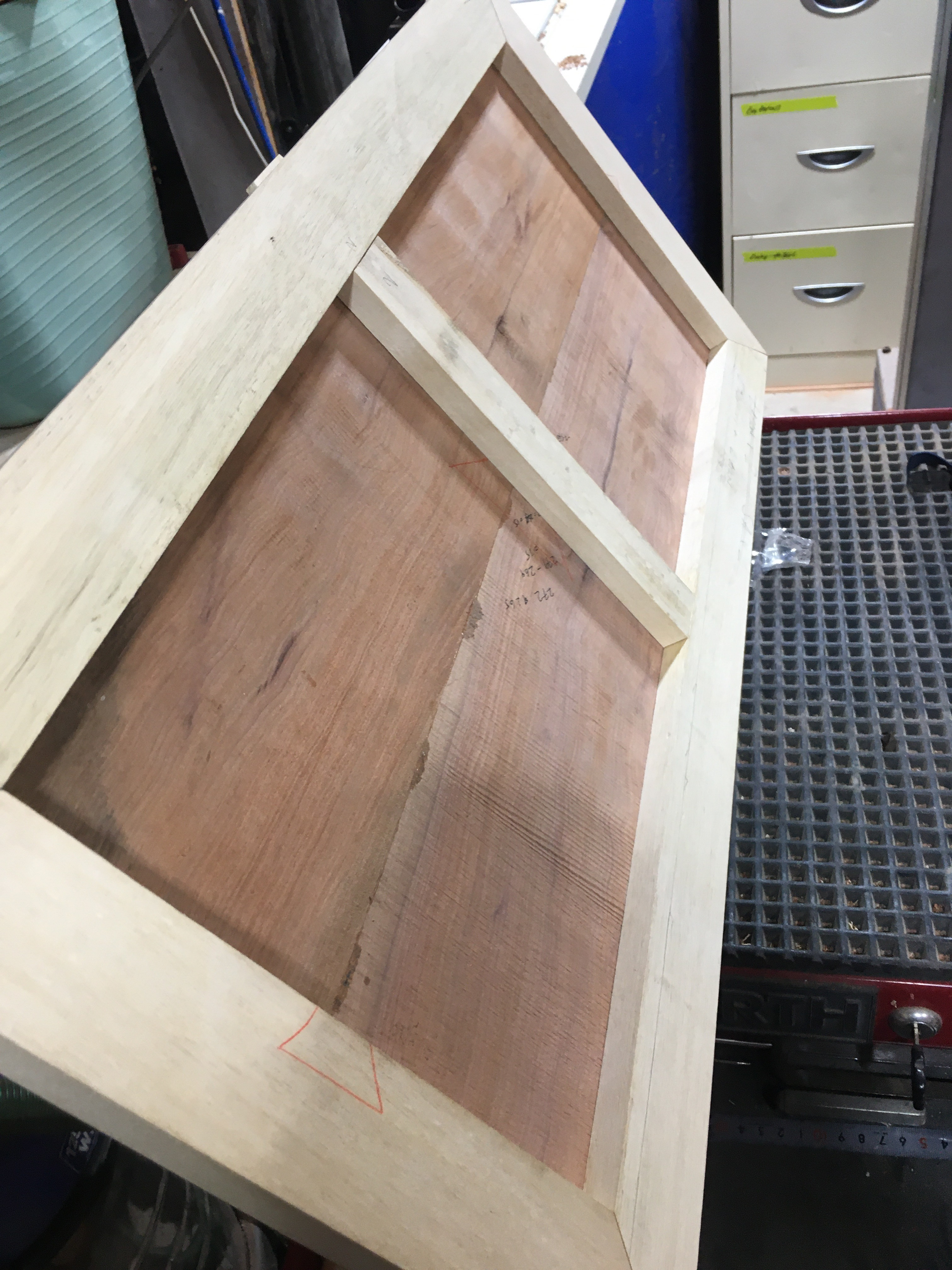
I sat in silence for a few minutes just staring at them. Is this what skill feels like? Or just dumb luck? I genuinely cannot tell.
Next: apron, spandrels, legs, and some uniquely Chinese joinery that'll require the same unfortunate level of precision.
Join the conversation