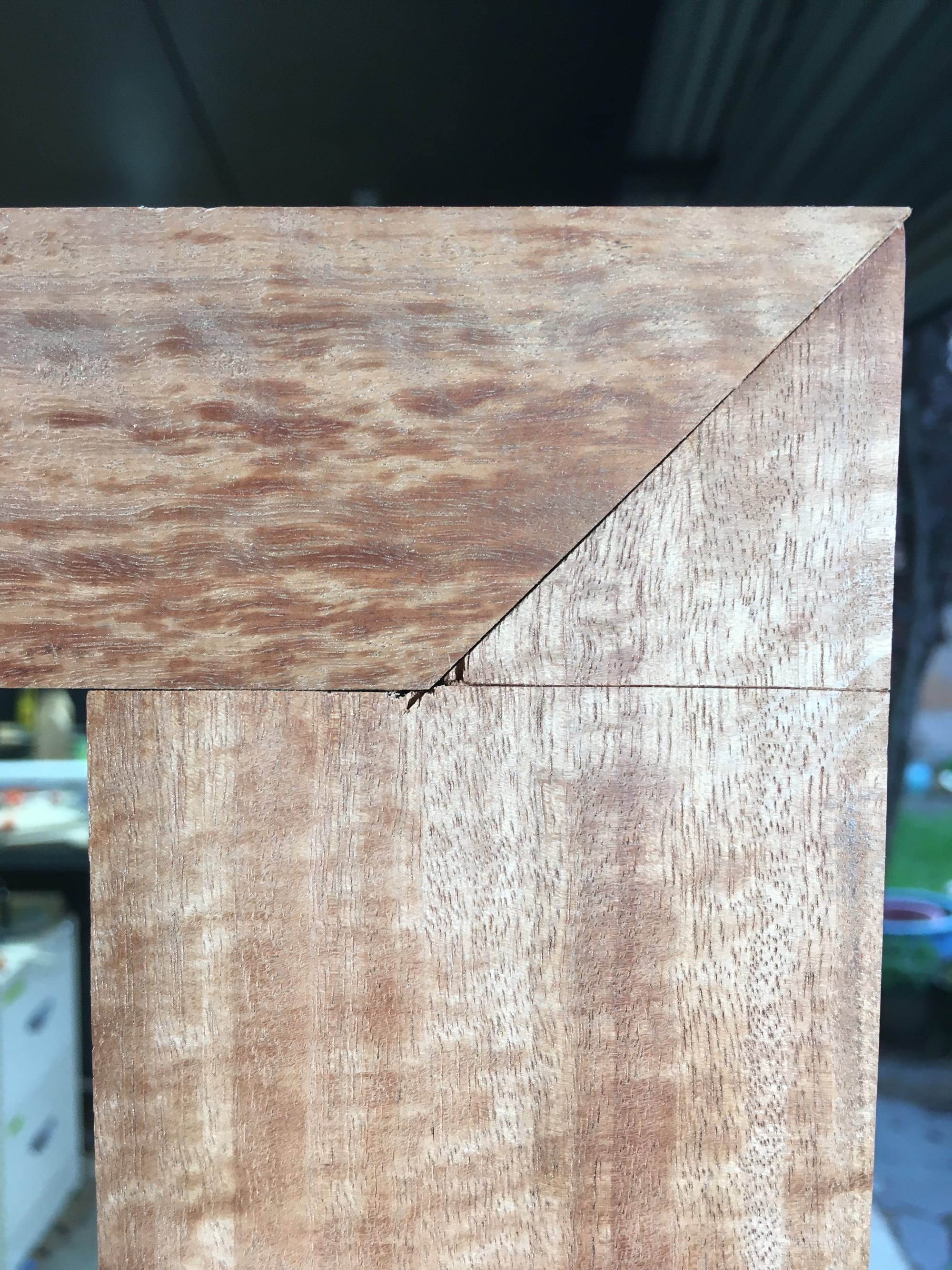
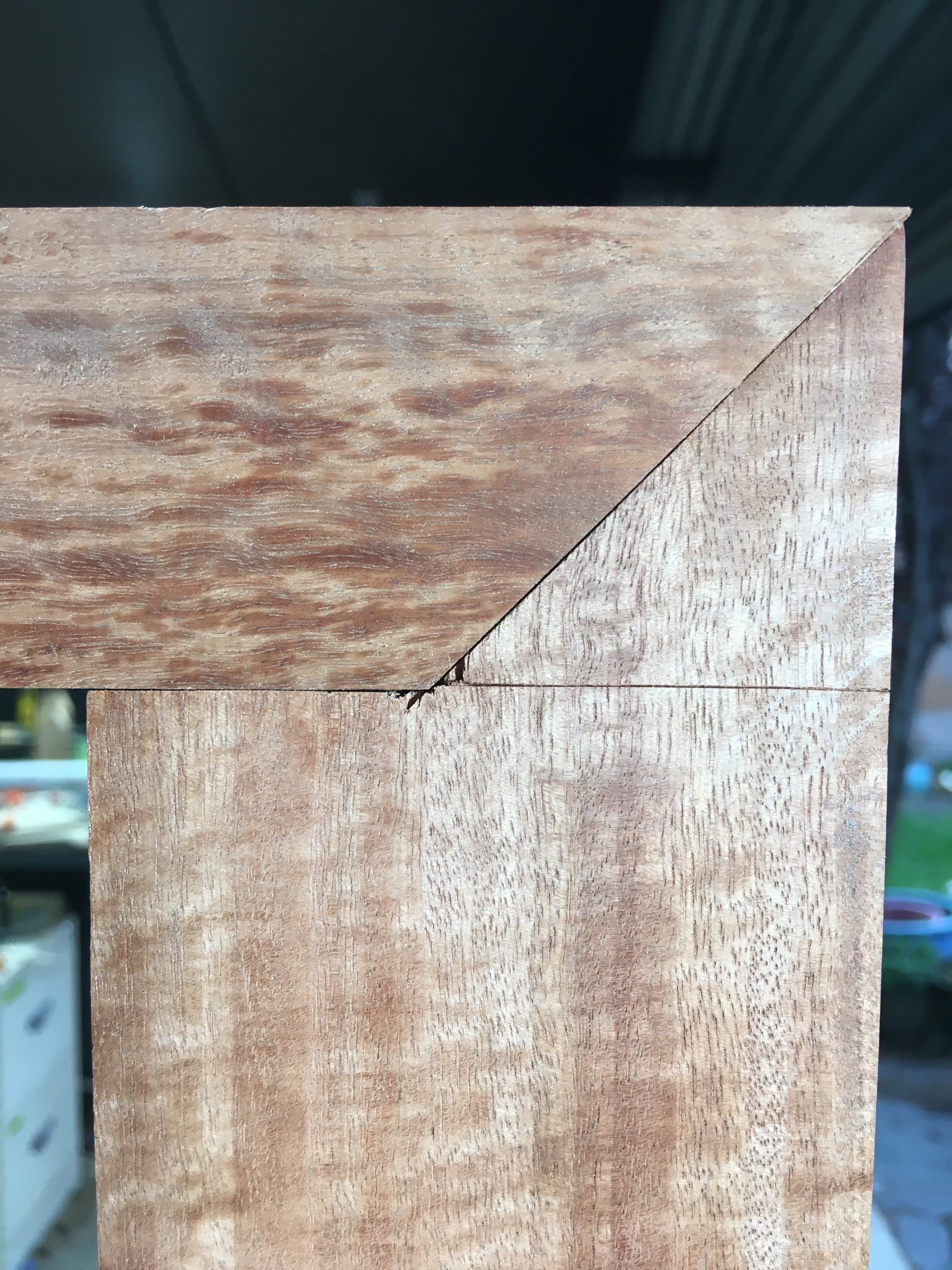
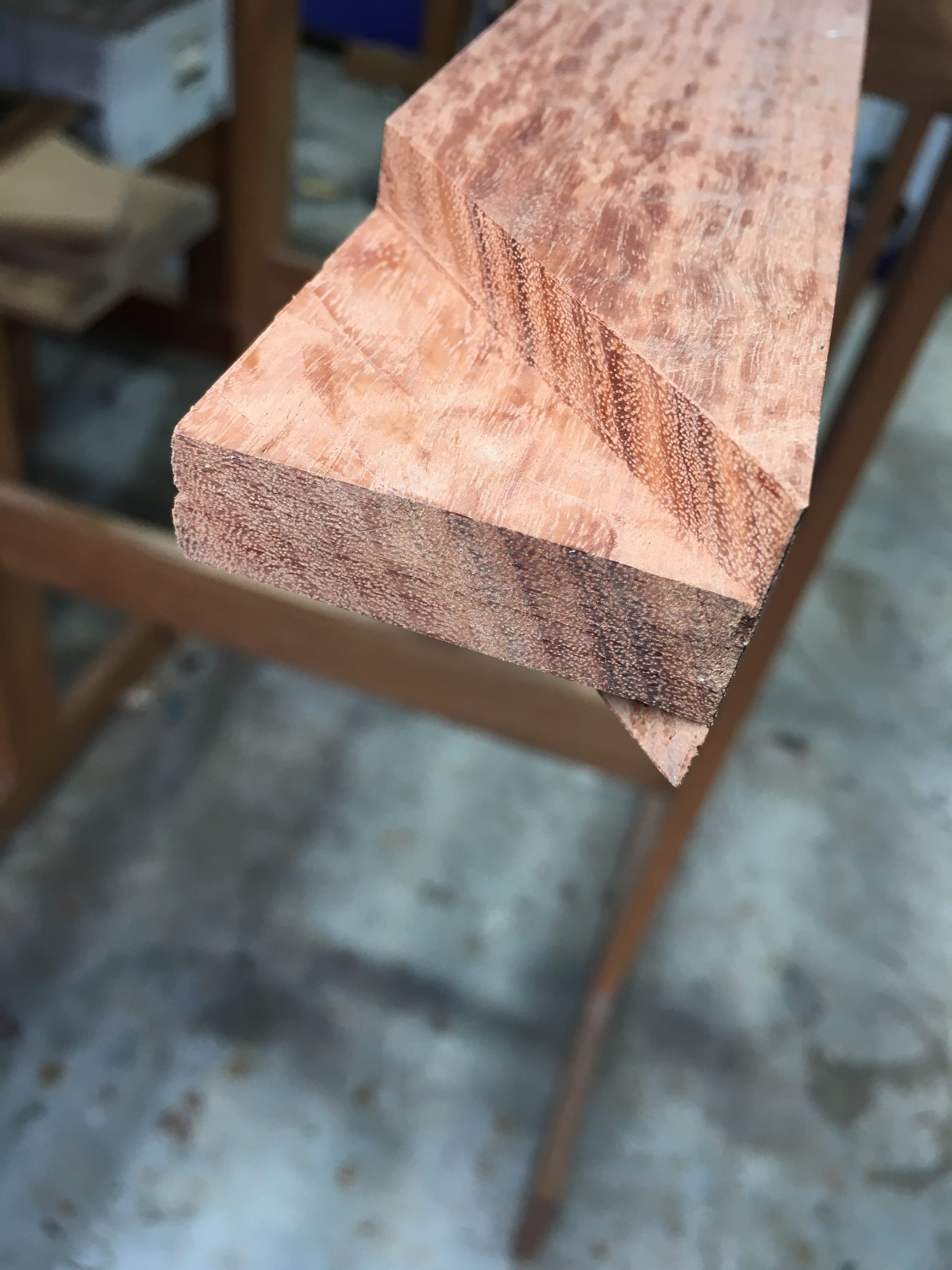
I'm back on the desk today and joined the frame members for the top. The corners meet with what I'm going to call a shouldered mitre, a surprisingly faffy way of using a 45 degree mitre where the members are of different widths. In this case the short sides are 80mm wide, and the long front and back rails are 48mm wide, and so the mitre ends up looking like this:
Which brings us to the problem with Red Gum: it does not tolerate hand tools, particularly chisels.
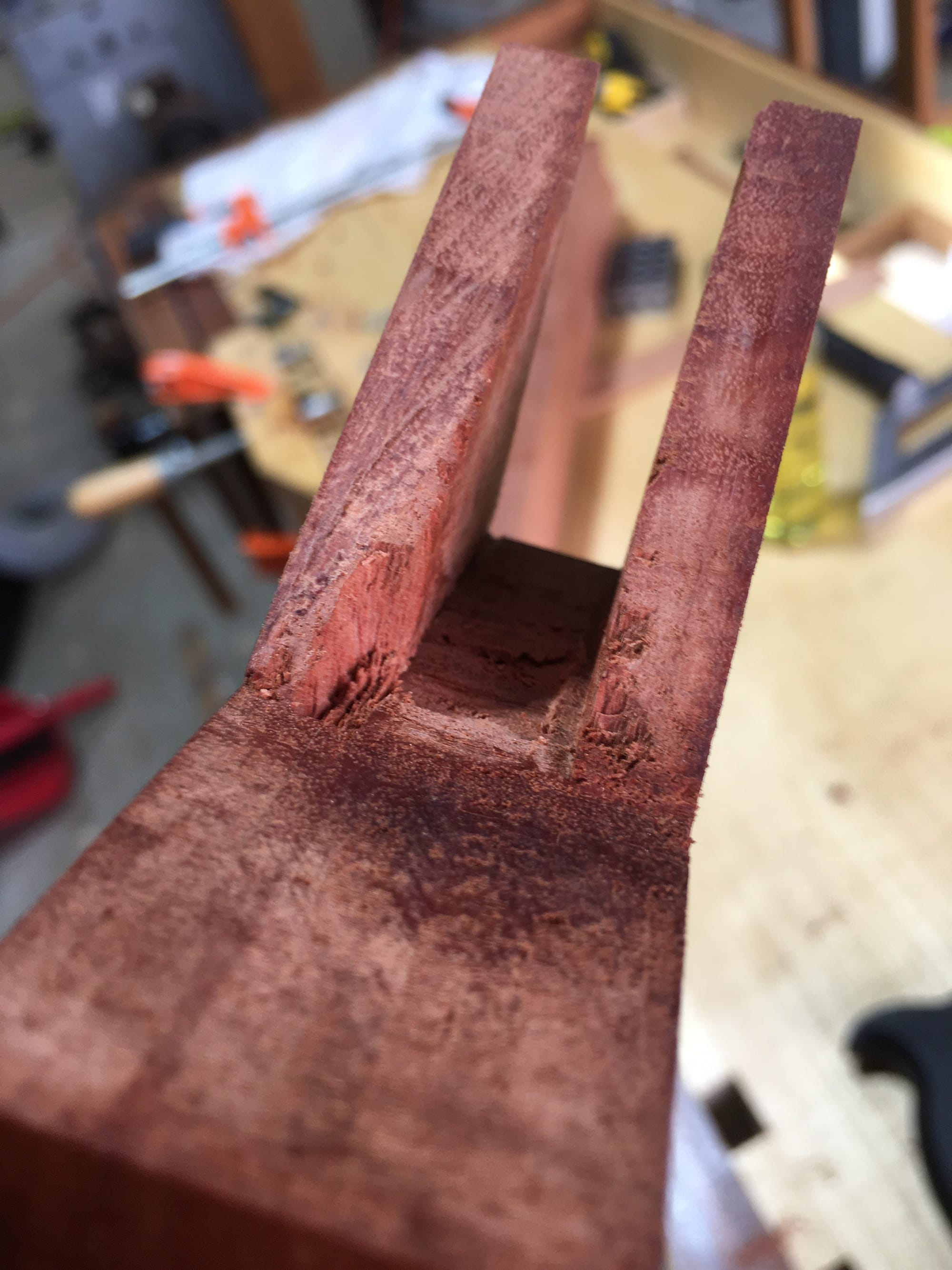
The corner joinery is a mitred bridle, and on the inside of the mortise piece it is not pretty:
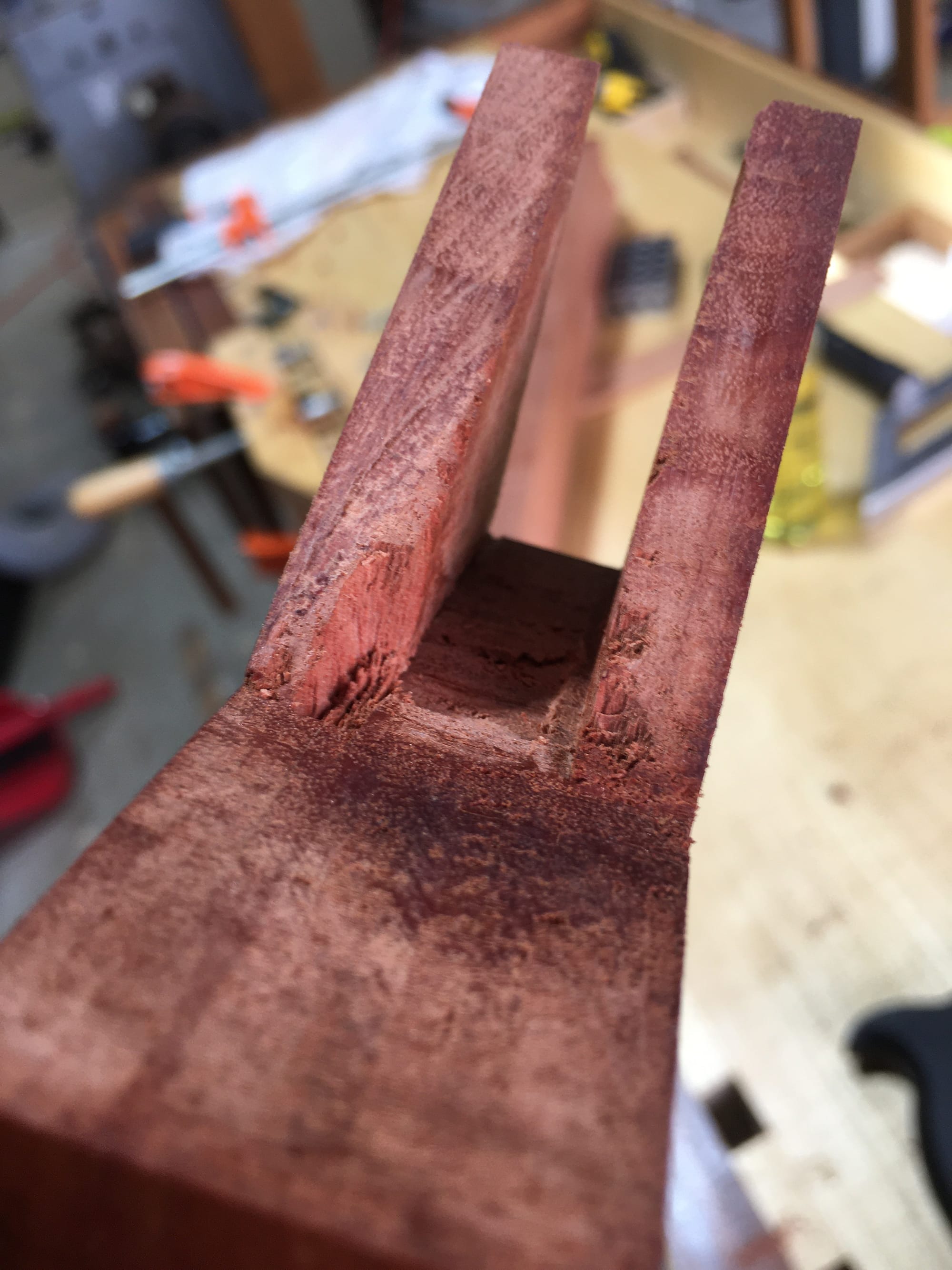
Red Gum has very short and interlocked grain, and very weak lignin (wood's natural glue) bonds, and so is very friable when working. Paring is a hassle, and as soon as you have to strike the chisel you can expect to lose some chunks. I could have spent forever rigging up some dodgy jig on the table saw I suppose, but at the time I couldn't think of any way to cut this that would've been quicker than doing it by hand, despite the crumbling.
Missing one corner of one cheek won't ruin the integrity of the joint, and the missing short grain on the faces is easily fixed. You'll do a lot of these fixes if you choose to work Red Gum. Not many do.
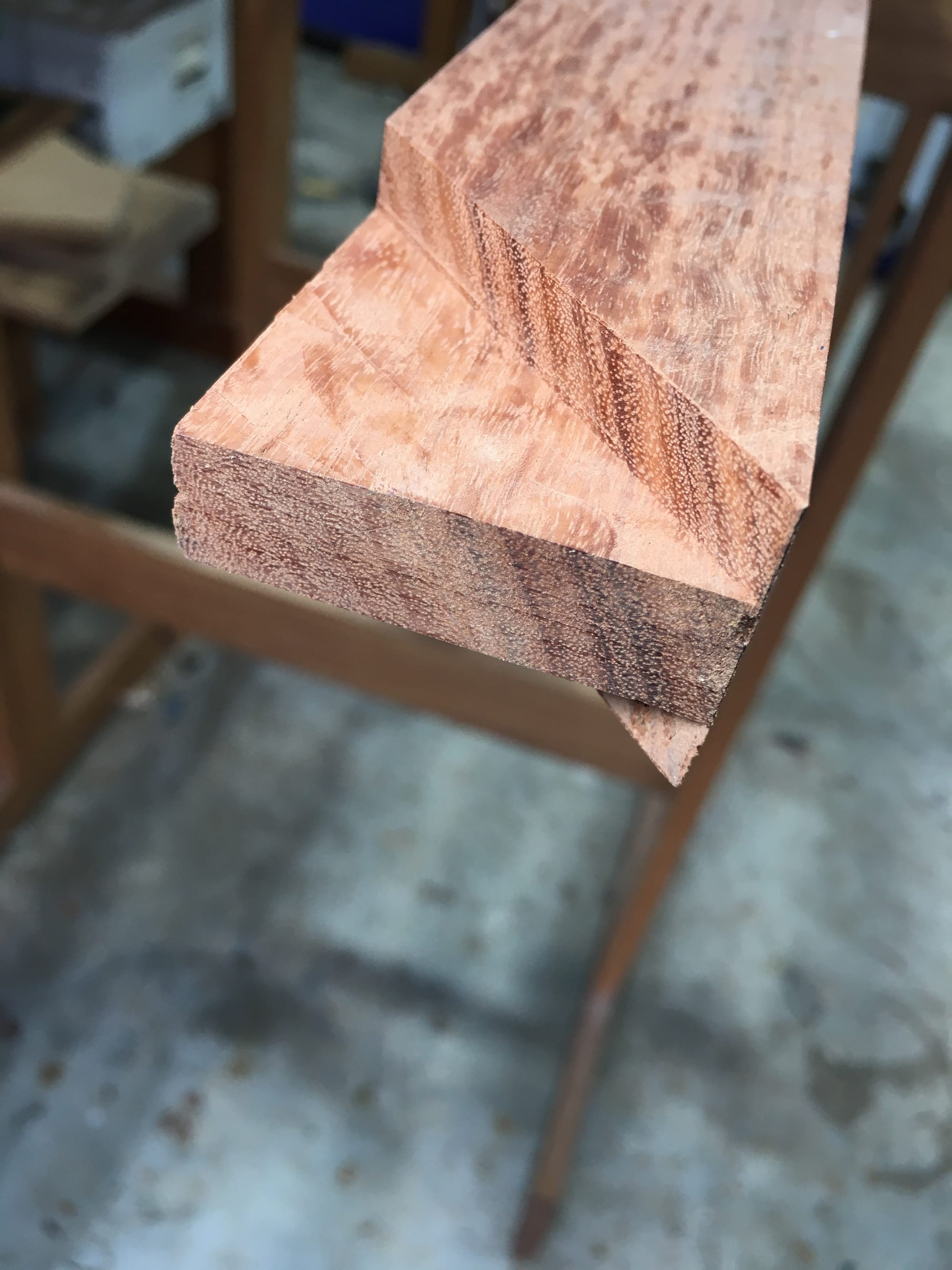
For the tenons on the long rails, I used a router. Why would I use that hateful tool I hear you ask? Because even though the router is known as the wood mangler in my workshop, as it is in many others, spinning machine tools paradoxically leave a crisp and sharp line on Red Gum:
Knowing intimately the working properties of the timber is an oft forgotten part of woodworking, even if sometimes you have no choice but to ignore that information.
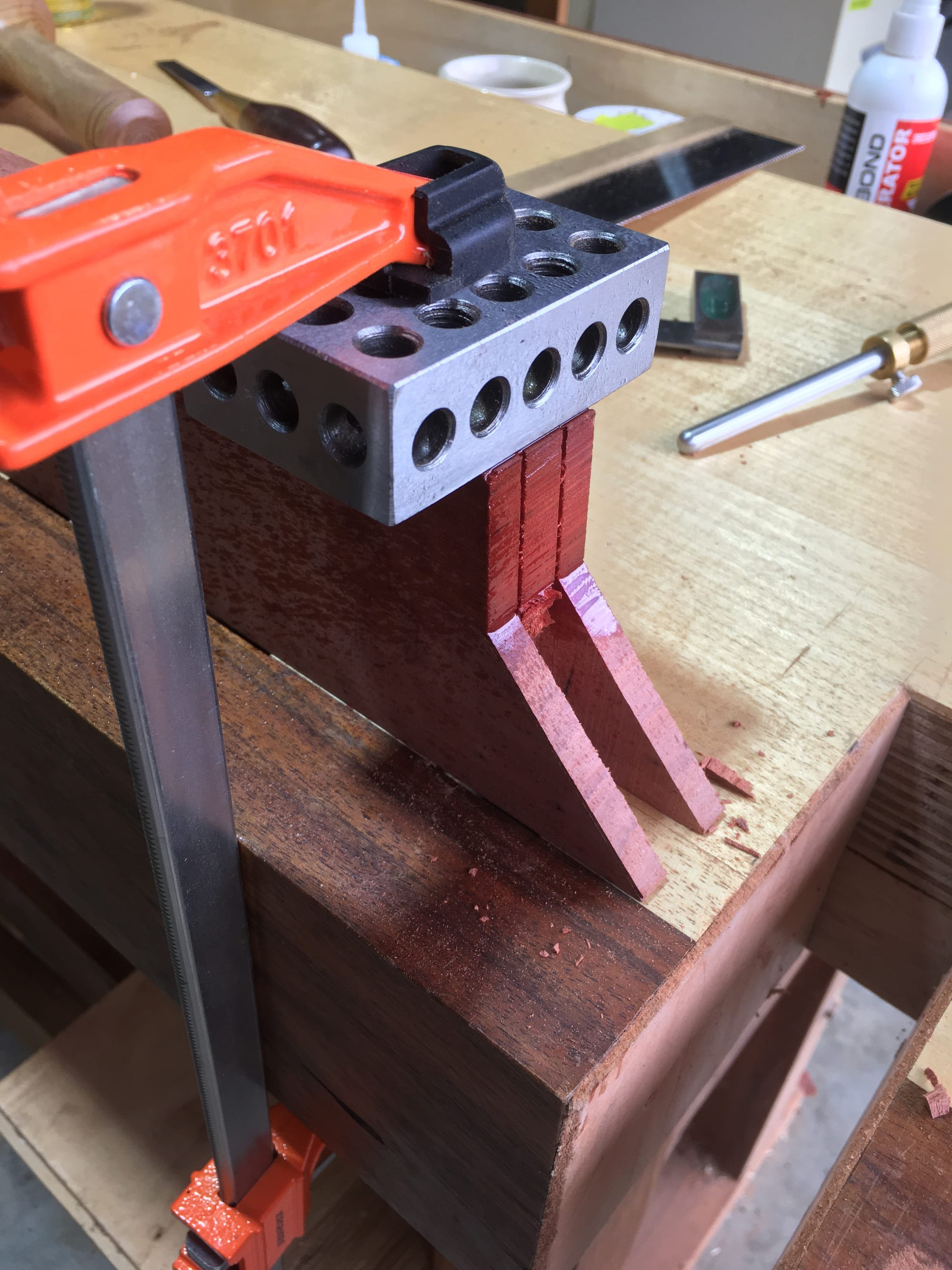
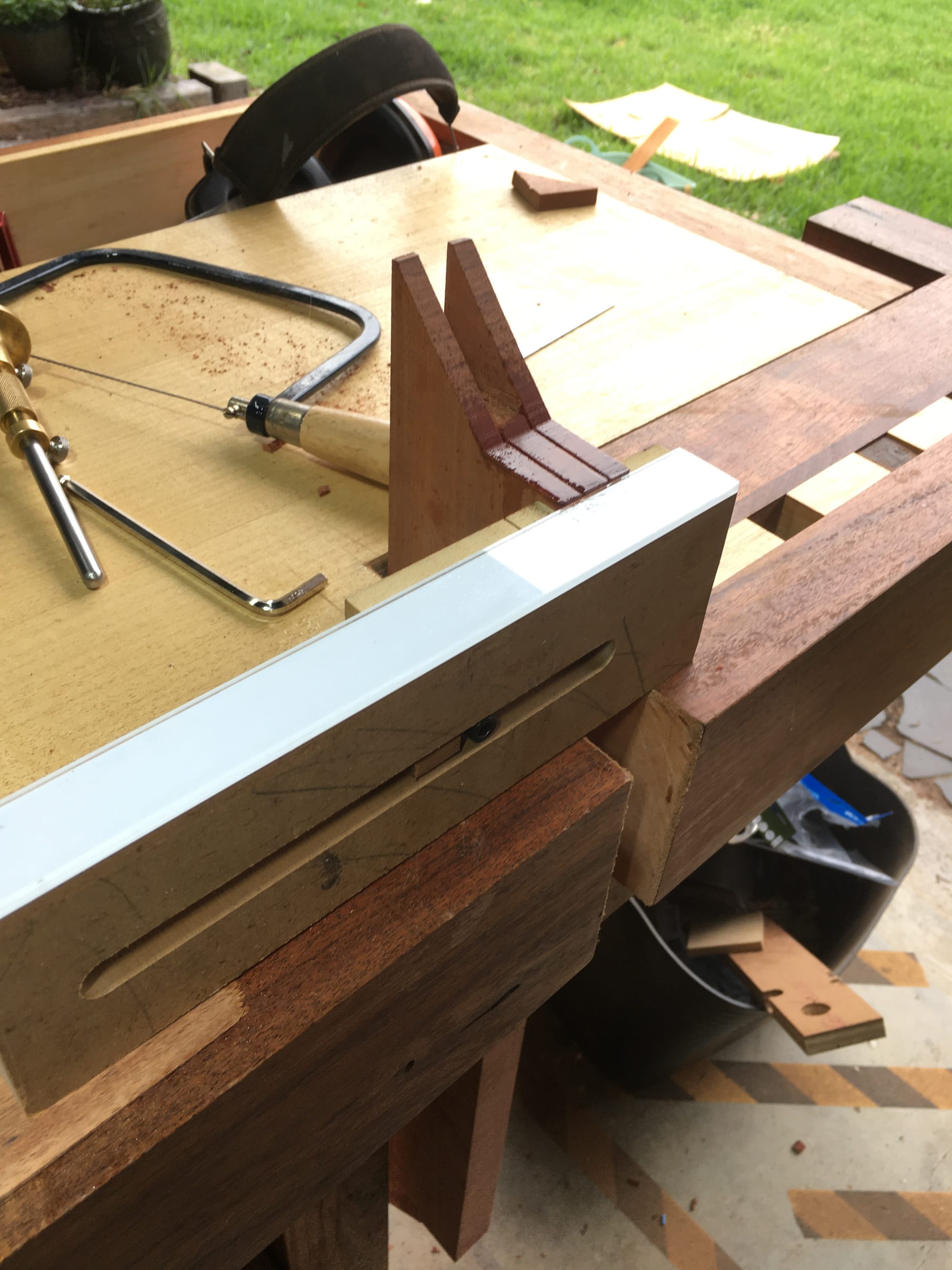
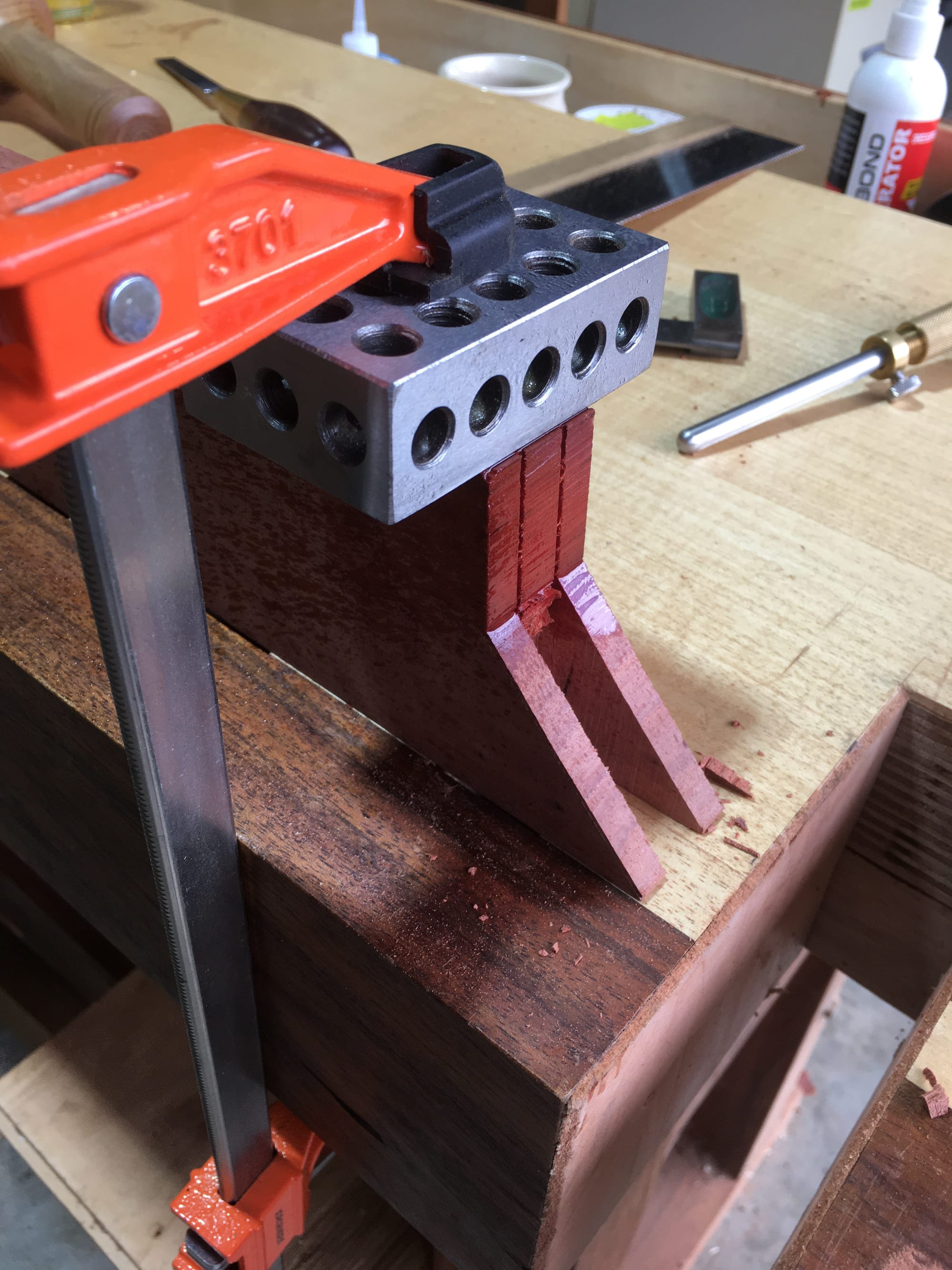
I gave the new paring jig a whirl. It performed perfectly.
Join the conversation