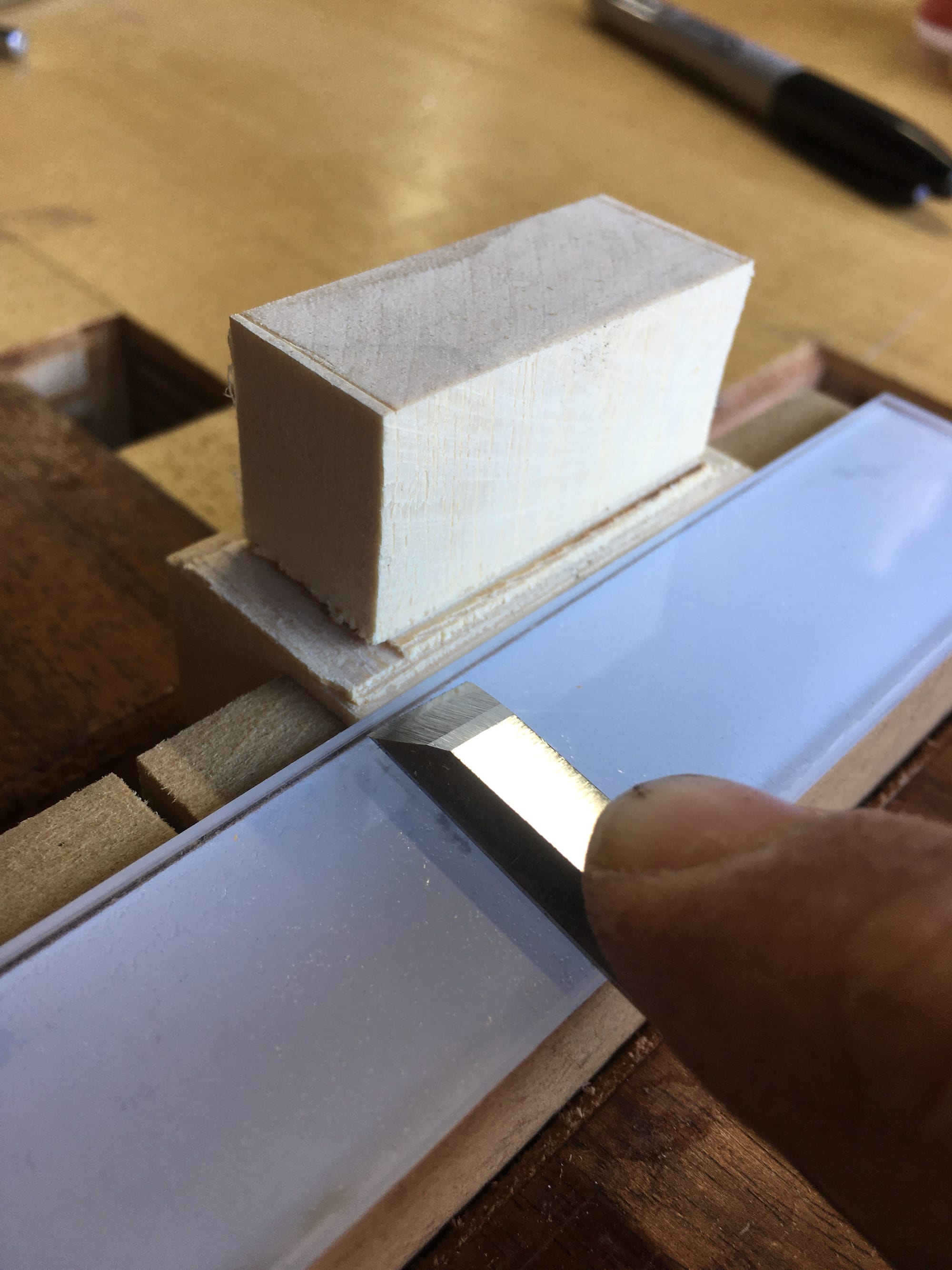
I'm prepping for a class I'm teaching next weekend on basic joinery: the mortise and tenon, the bridle joint and the cross-lap halving joint.
The shoulders of the tenoned piece are where a mortise and tenon derives most of its strength. A lot of people recommend undercutting the shoulder because it makes it easier to get a clean, gapless seam between the shoulder of the tenoned piece and the edge or face of the mortised piece.
But, you may be surprised to hear, I disagree with this. Not simply on principle of avoiding things that make my life easier. If the shoulder gives the joint its strength, and you remove half of the shoulder, surely some of that strength is diminished. But paring a perfect shoulder on four sides is genuinely difficult, and would take the average weekend woodworker a lifetime of practise to get right - time on the tools is everything, and there just isn't enough time on the tools if you're sensible enough to keep this malarky as a hobby.
So here's a baseline paring jig that I cribbed from Robert Ingham's superb "Cutting-edge Cabinetmaking". He intended it for dovetailing, but it applies perfectly to tenon shoulder and anything else that relies on accuracy.
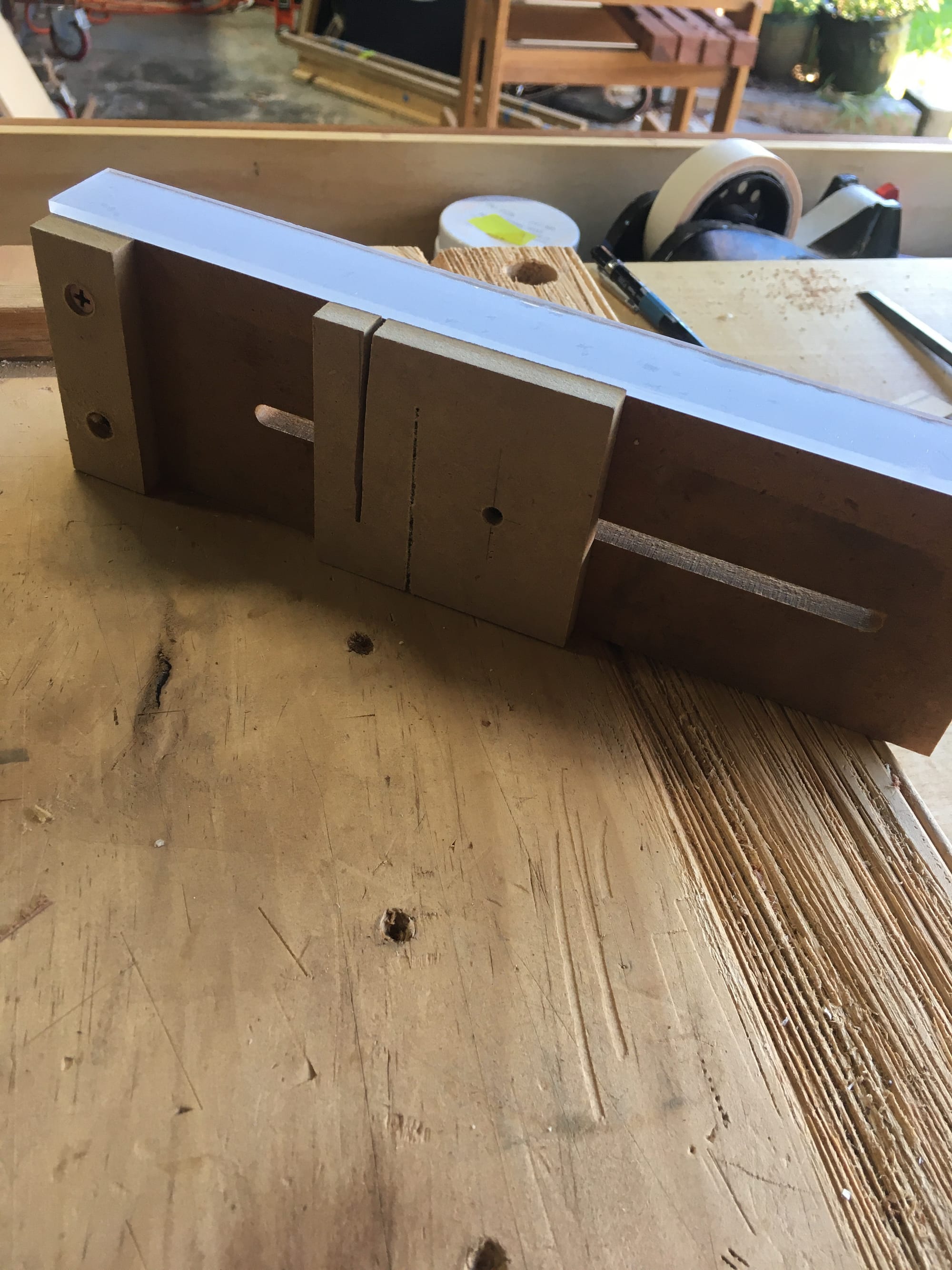
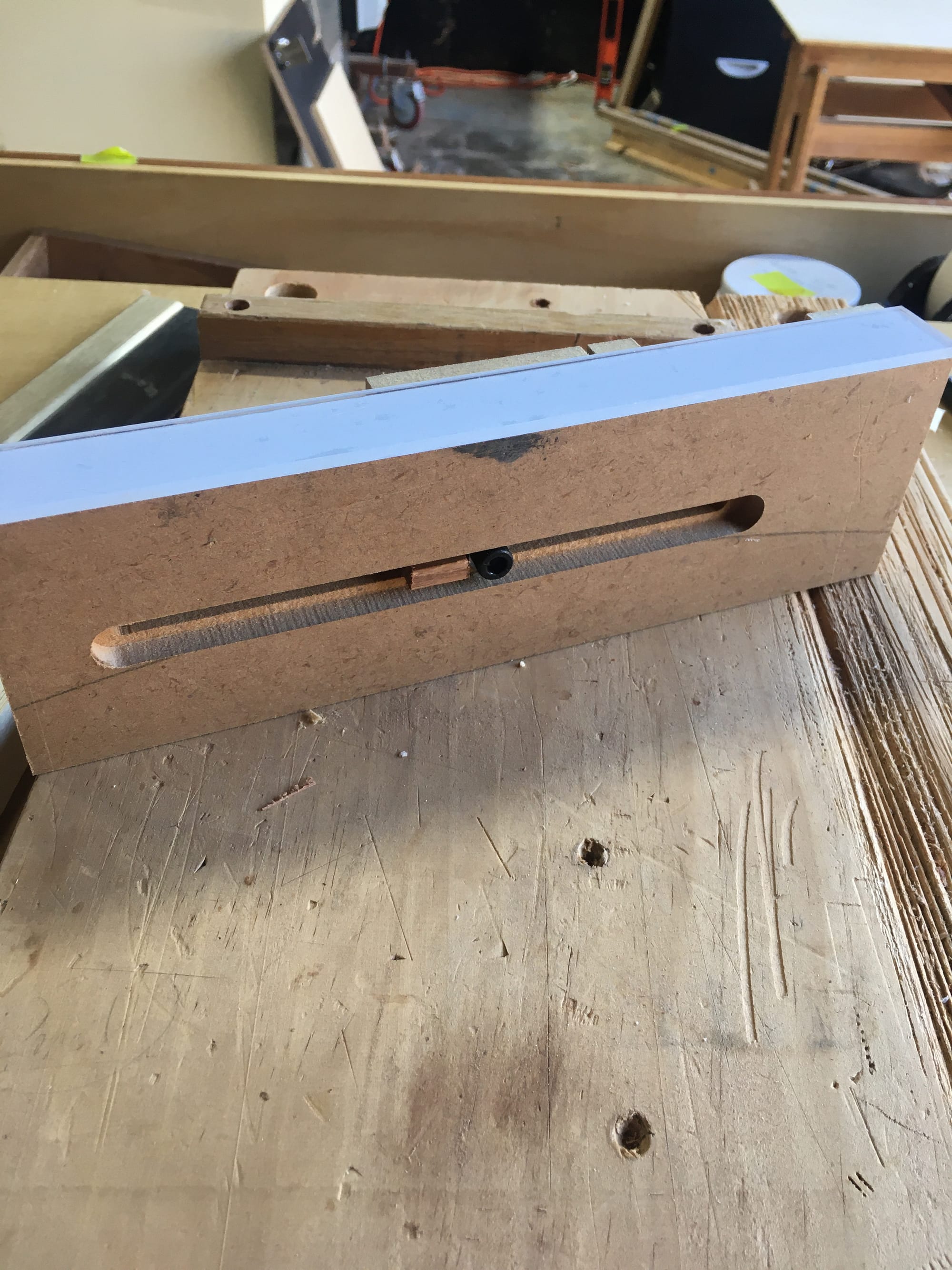
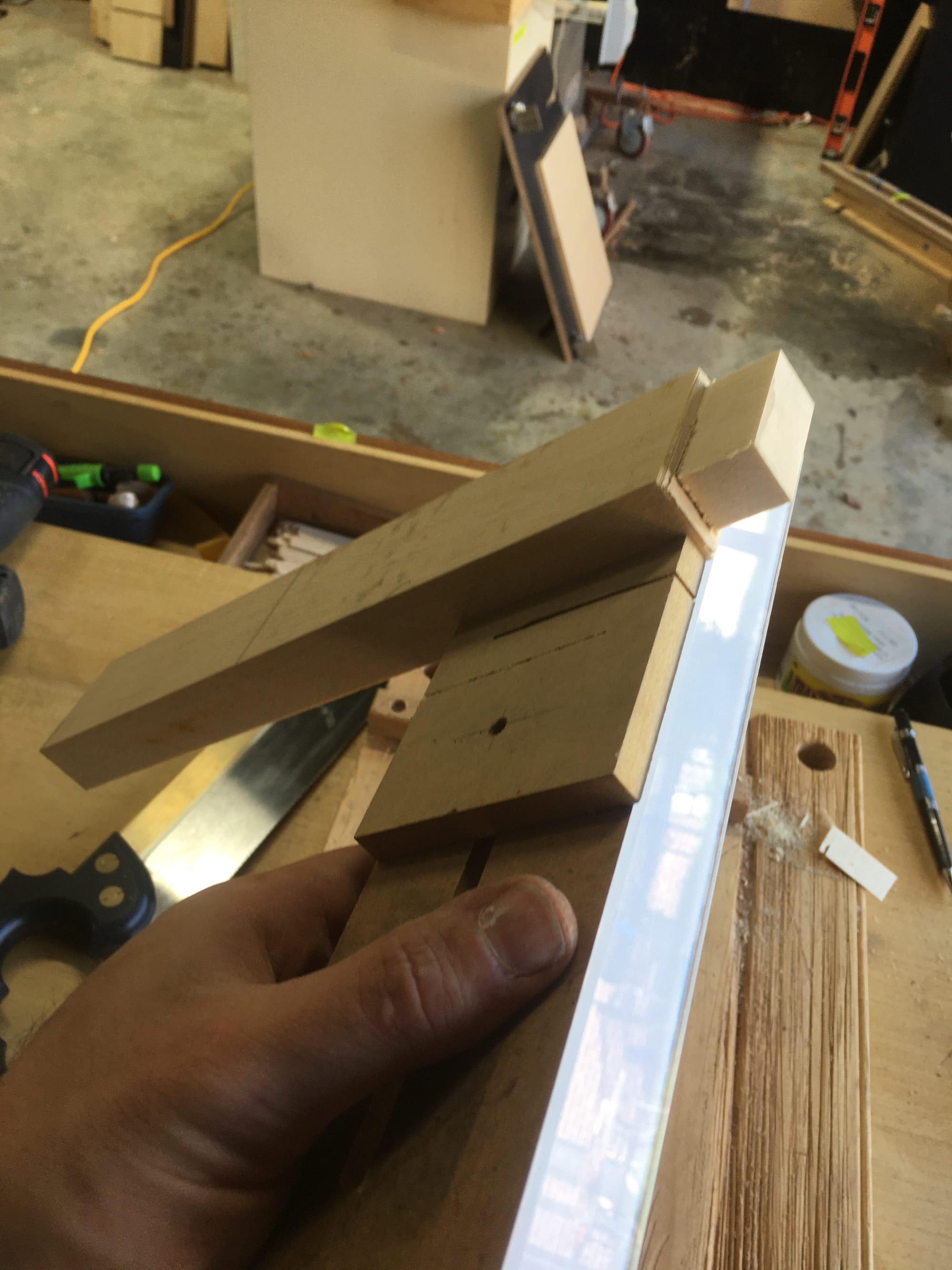
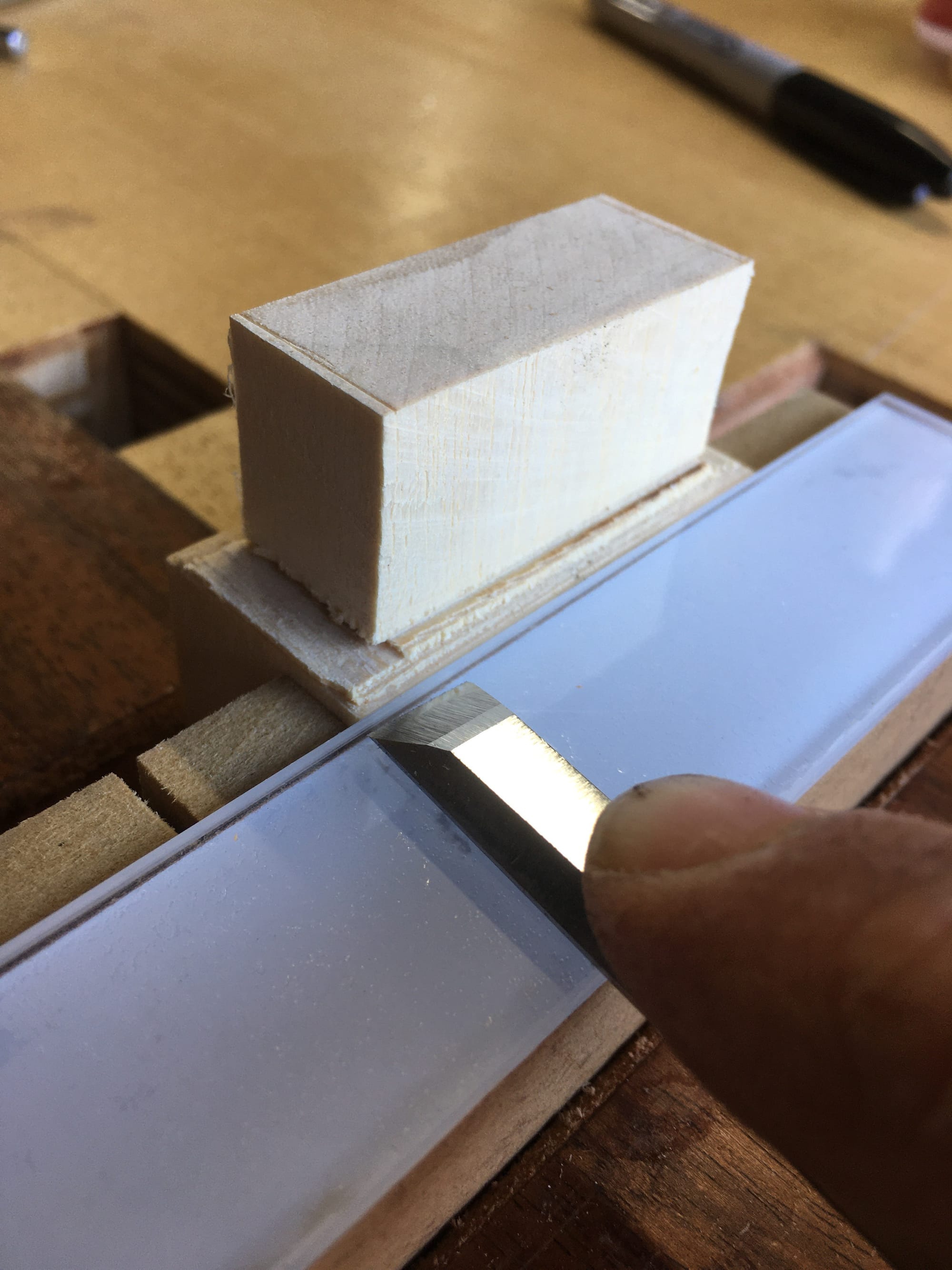
The sliding MDF clamp has a 6mm threaded hole that holds surprisingly well. The perspex bearing surface extends the life of the jig.
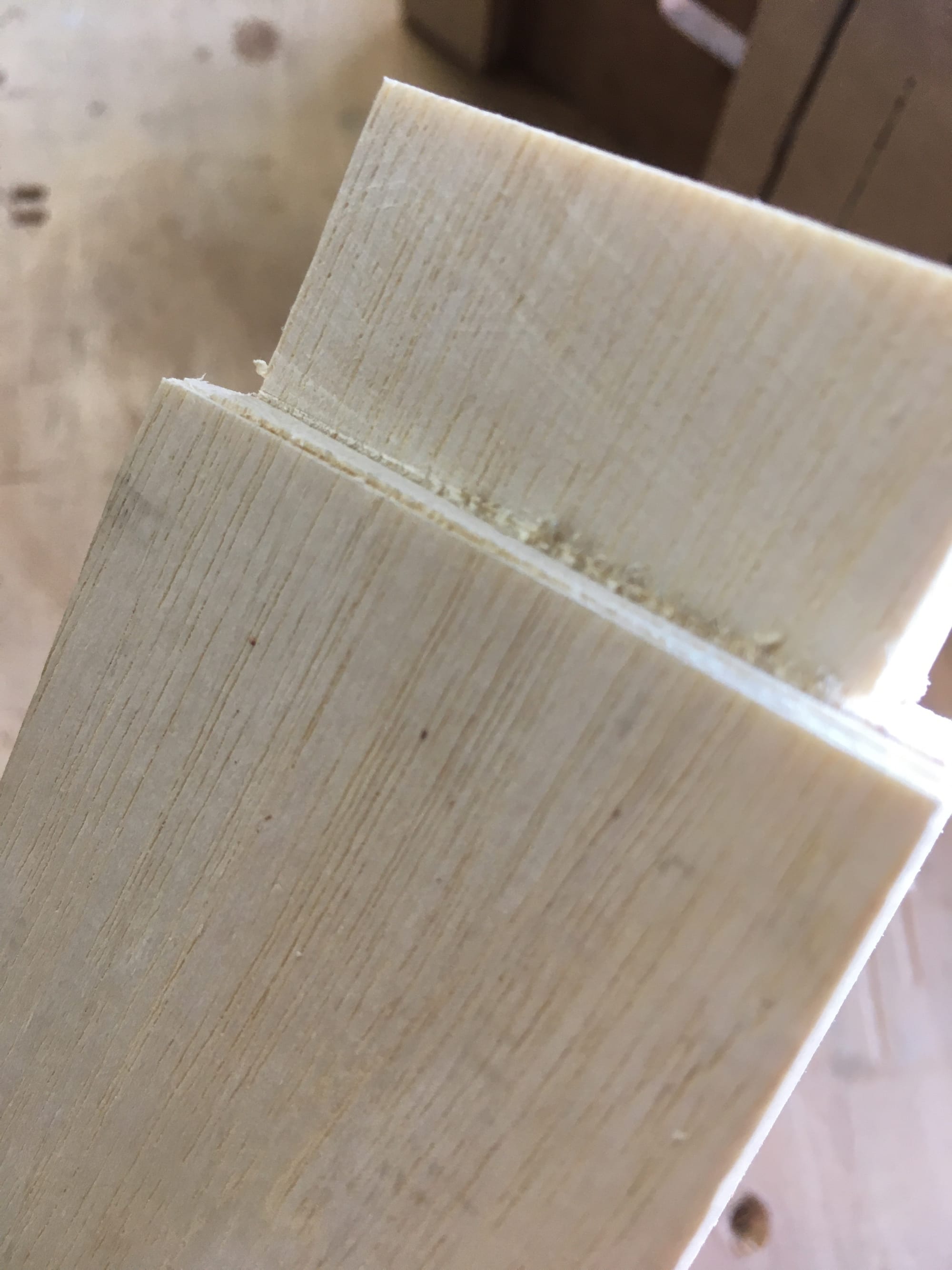
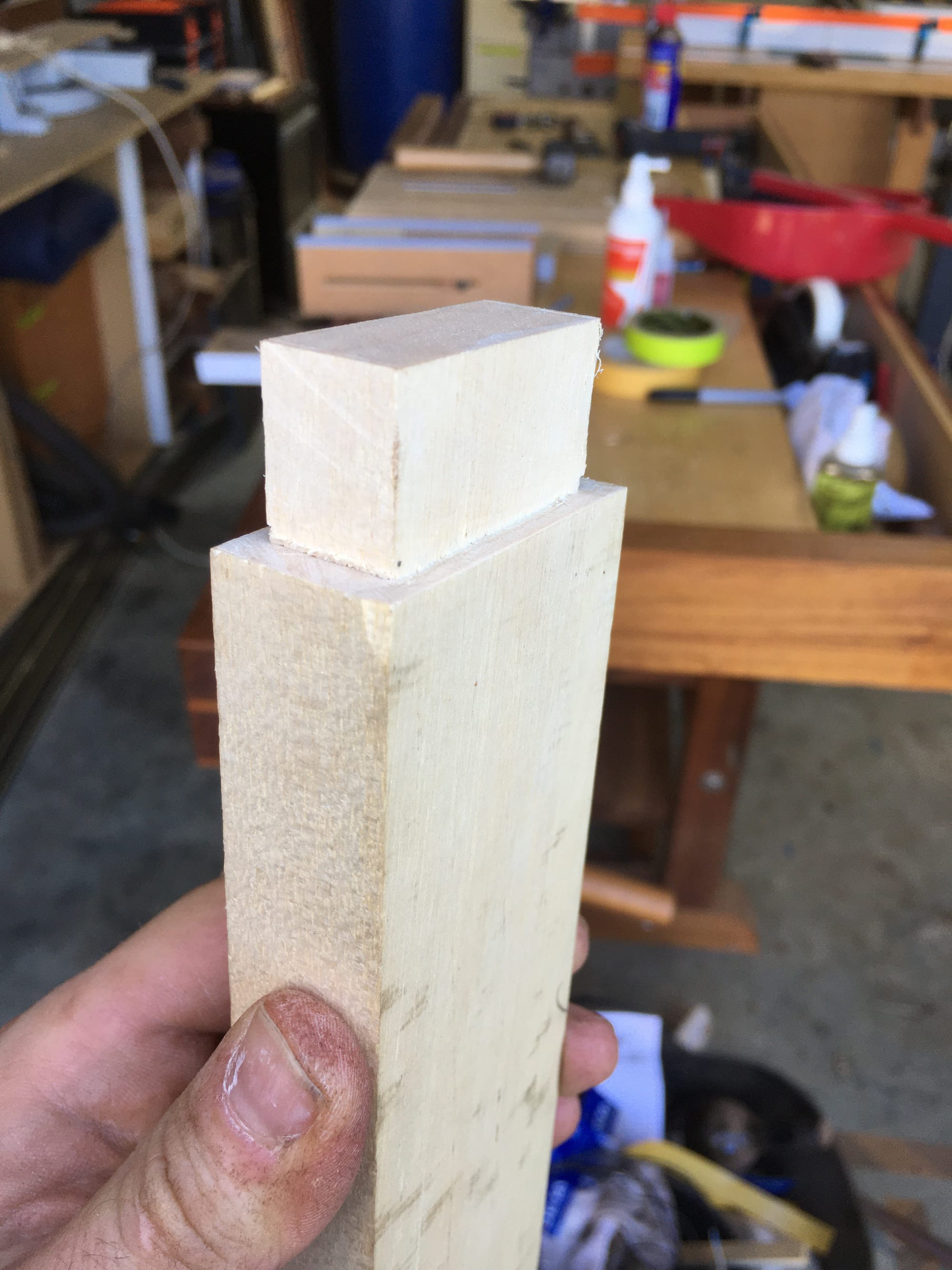
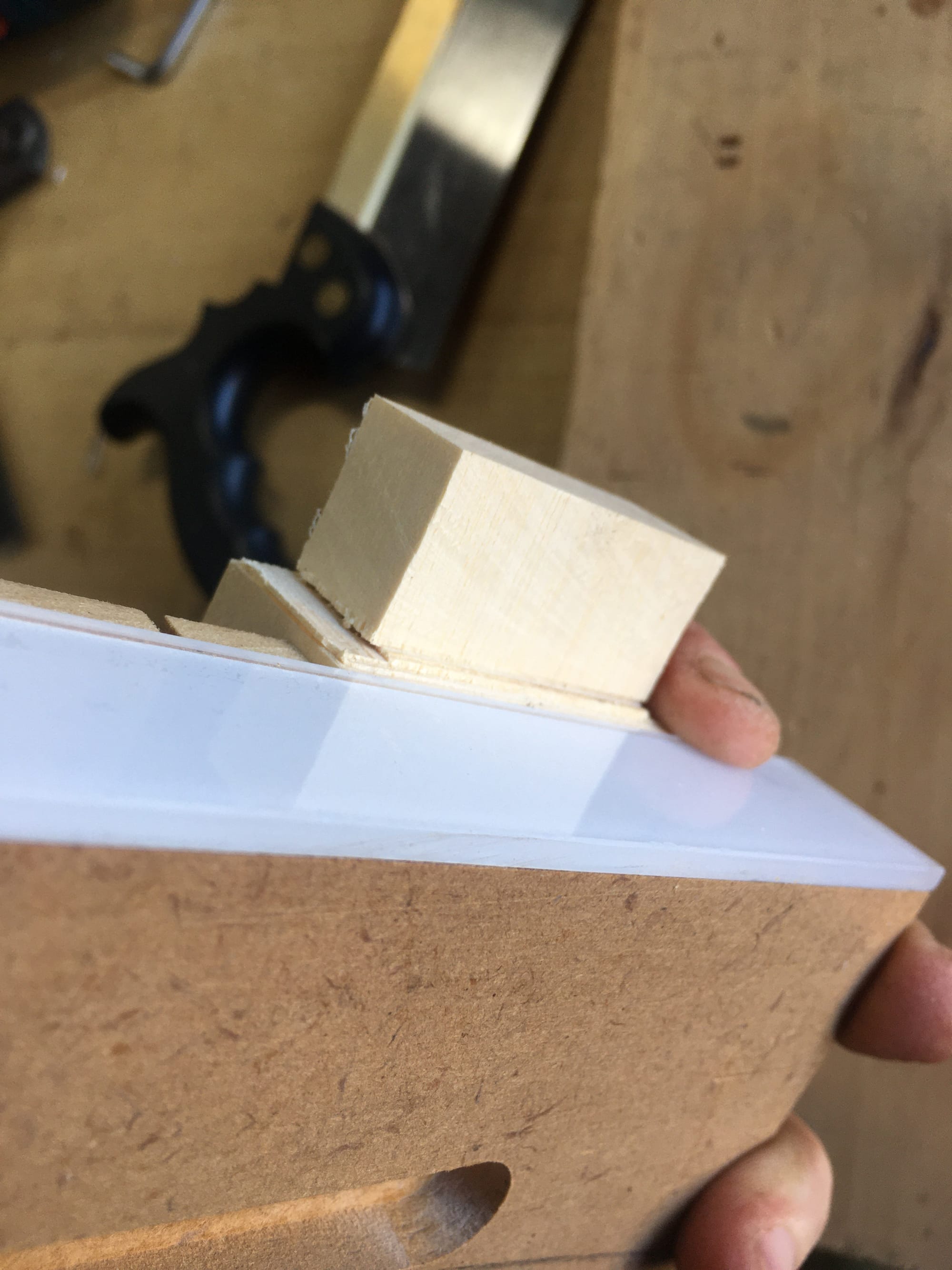
Before and after. Get as close as you can with the saw, and pare the rest away.
The perspex bearing surface extends the life of the jig for years over bare MDF. The thread tapped in the MDF clamp holds surprisingly well. The baselines it enables you to produce with ease are perfectly square.
Join the conversation