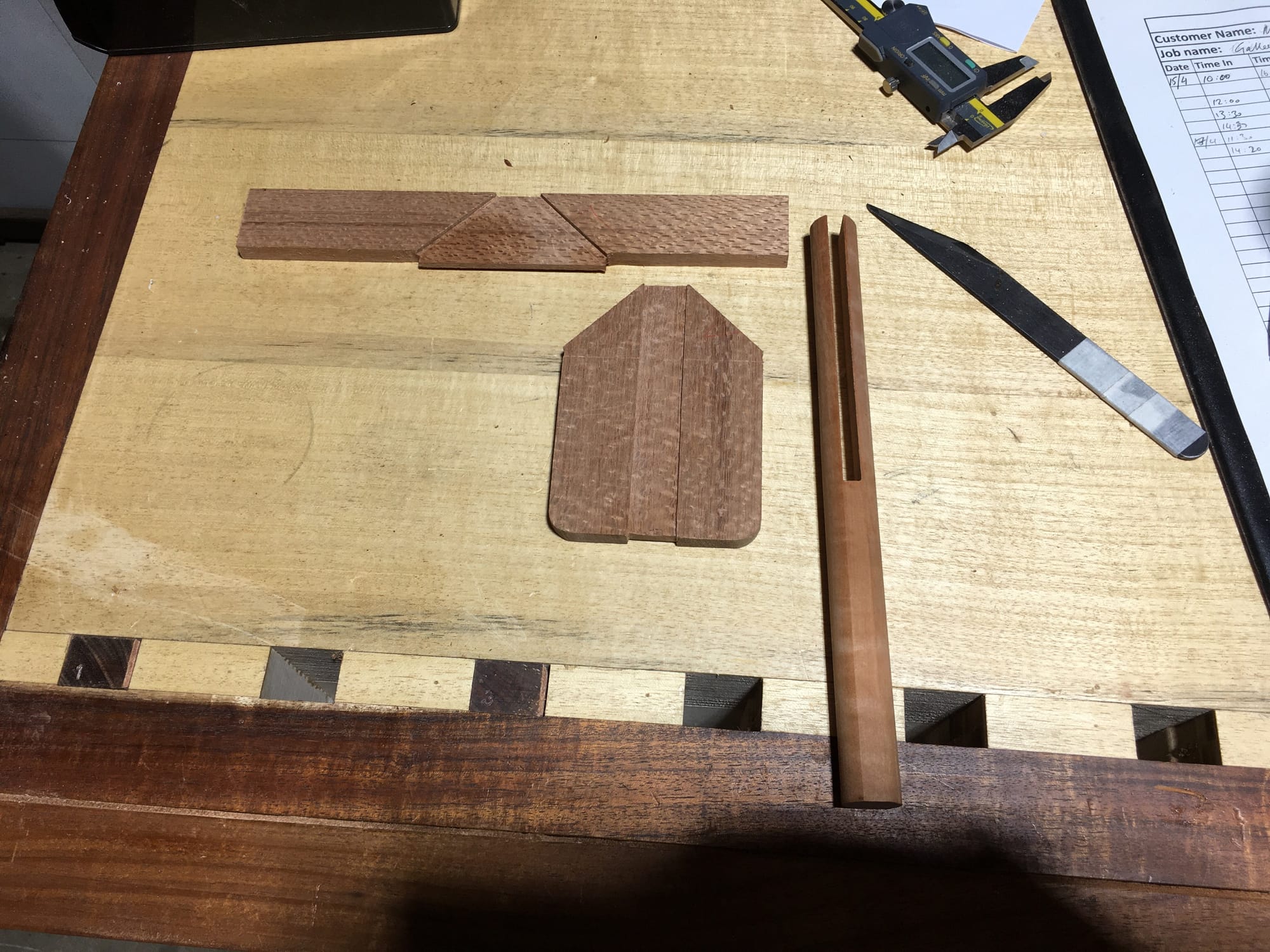
Three pieces of silky oak and myrtle are sitting on my bench. Offcuts from the scrap pile, nothing precious. I'm making joinery samples for an exhibition in a few weeks. Something people can touch, pull apart and see the work that goes into the tables in front of them.
They slot together to form what the Chinese call a 案 (àn) table. The 'recessed leg table' has no western counterpart. In the European tradition the apron of a table inserts into a mortise in the legs. In the àn, the spandel slots into a bridle in the apron, and the leg slots into a bridle in the spandrel, locking the lot together in a fashion that becomes stronger and tighter as weight is placed on the table top. Yet the whole thing disassembles. No tools. No fasteners. Flat-pack, four centuries before IKEA, except this version lasts a little longer than your billy bookshelf did.
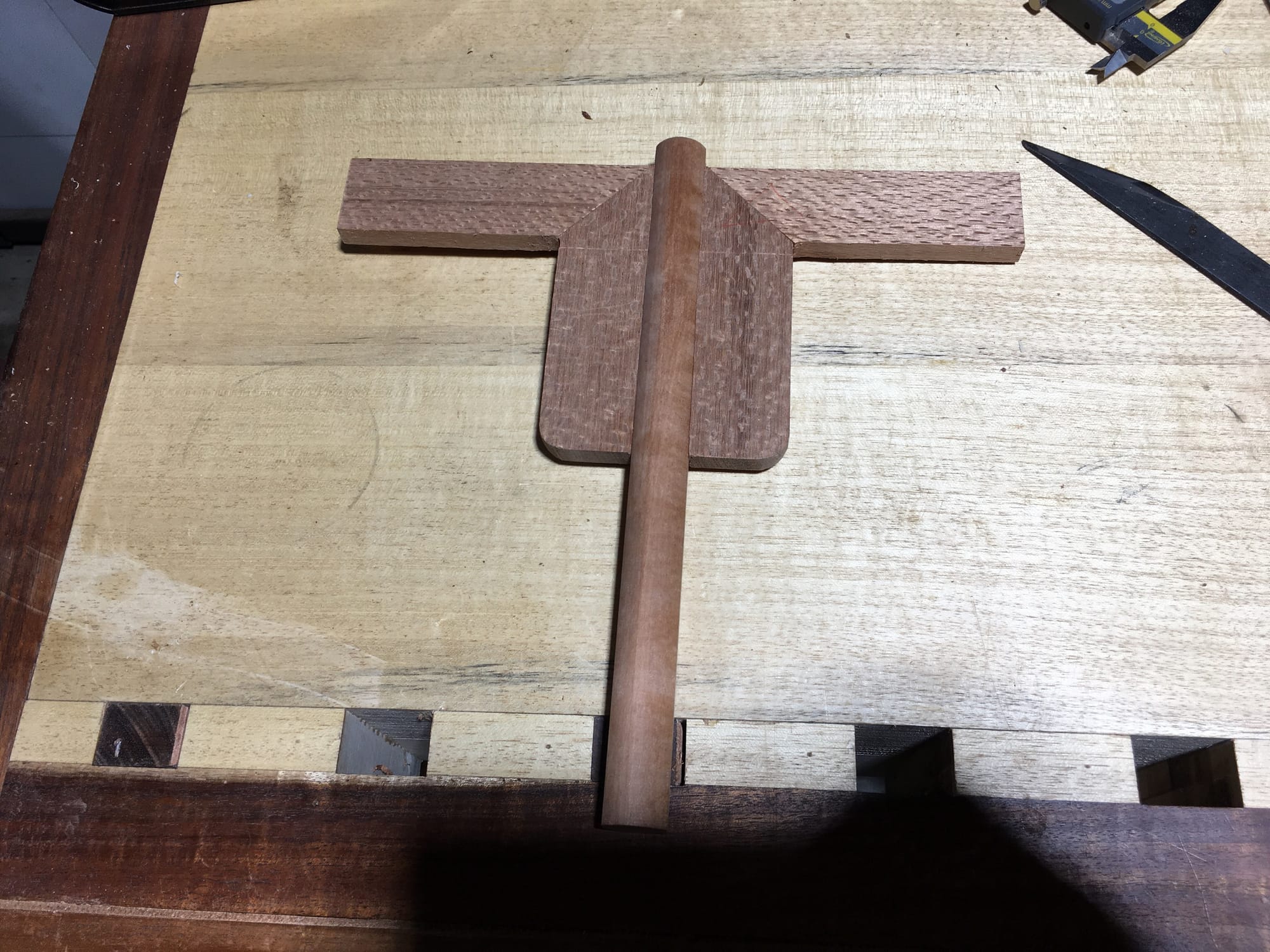
This sample is the first time I've tried this join and I nailed it first time, which never happens. But the silky oak taught me something that drawings didn't. The dovetail slot where the leg meets the spandrel is a millimetre and a half deep, and the arris it creates is very, very fine. Silky oak is stringy, and that fine arris will suffer if the joint is assembled and disassembled more than a few times. A timber with long, consistent grain would handle it better. Silver ash. Blackwood. Myrtle. The traditional Chinese timber for this form, Huang-Huali, has a dense, waxy grain that cuts like cold butter. But the Bellarine is not Hainan Island, and I can't afford Huang-Hauli, which goes for about $2,000,000 USD a log.
I recently saw a real àn at the NGV. A side table, Ming dynasty. The top is eight millimetres thick. Eight. The apron the same. I build Nakashima-inspired dining tables with beams that are ninety millimetres square. The stretchers on a standard Parsons table are twenty-two to twenty-five. A farmhouse table might have fifty-millimetre stretchers. This thing was eight millimetres, four hundred years old, and dead flat.
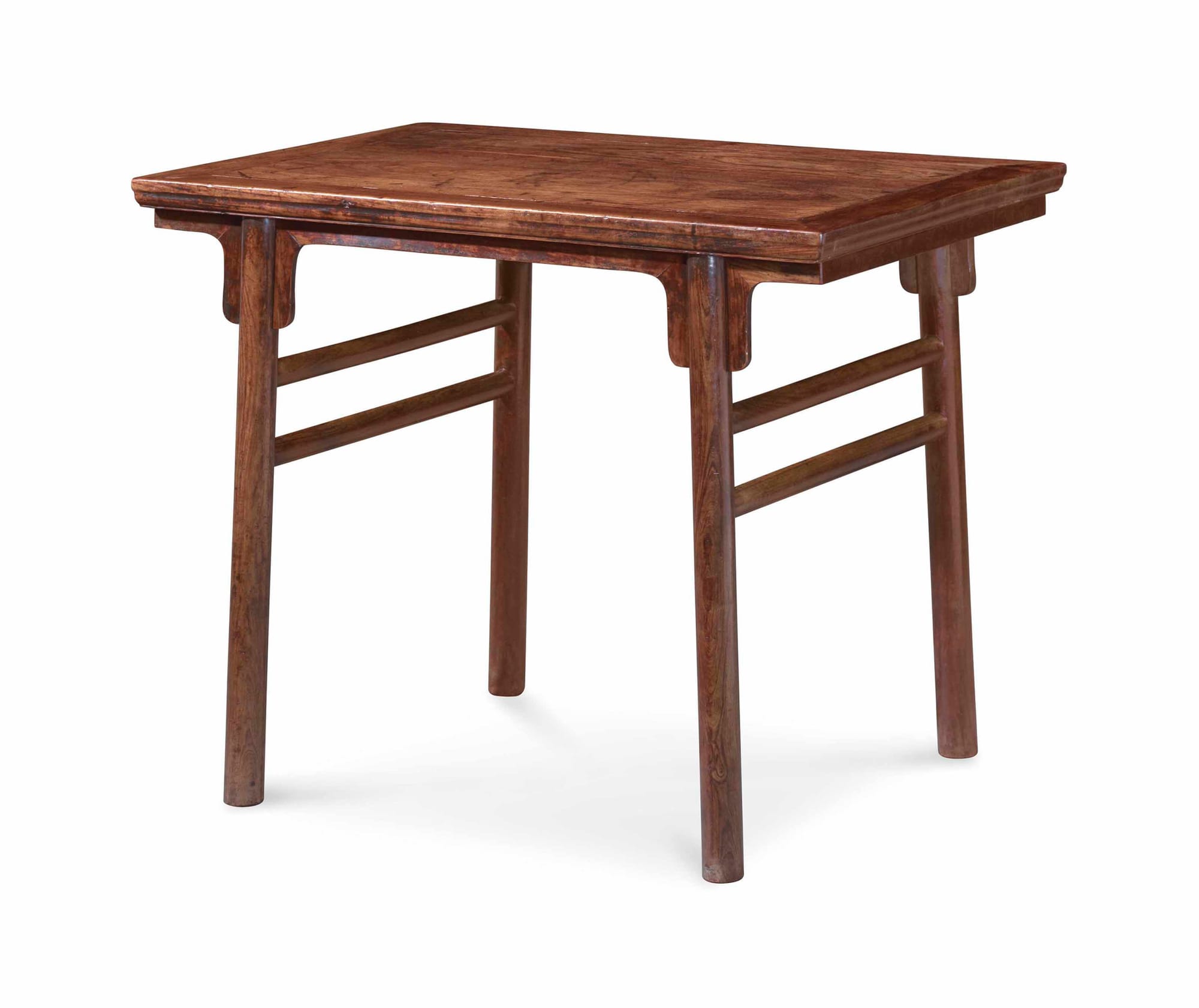
That's the thing that grabbed me in front of that table at the NGV, and it's the thing that's reshaping how I think about furniture. When I started making I wanted every part of every piece to be functional as well as beautiful, but that's not the Western way. The Western tradition applies decoration: mouldings, inlays, carvings that are added to a piece after its structure is done. I learned the Western way because that's what the books taught.
In Chinese furniture, at least until things started to decline during the Qing dynasty, every component was structural. Even the everted flanges - the upturned ends that prevent objects sliding off, called 翘头 (qiàotóu) - aren't just stuck on like they would be in Europe; a solid piece is shaped to include the flange, the groove for the top panel to float in, tenons to slot into the top and mitres to form the short edge of the frame, as well as receive the leg. Lattice work is part of the structure. Curved braces are doing mechanical work.
I've been cutting a three-way mitre joint for years. Successfully, too. It looks clean, it holds, customers are happy and other woodworkers coo over them at the galleries. But it's what Chris Hall dubbed a degenerate form. A simplified version that gets the appearance without the full mechanical logic of the original. I didn't know it was degenerate until I studied the real thing. Now I know, and there's no unknowing it.
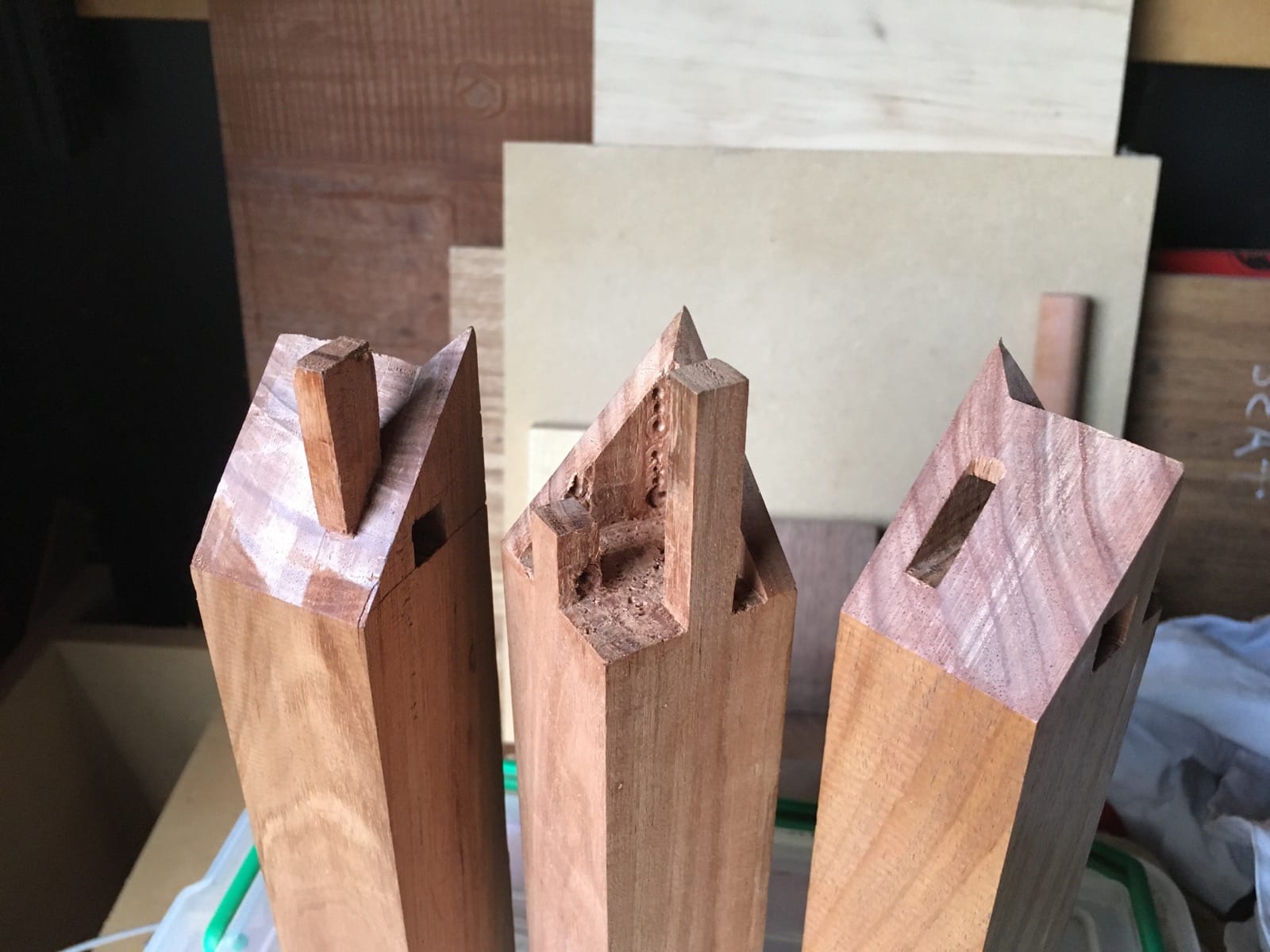
Now that the samples are done I'm making a pair (always a pair) of àn tables. One in Silver Ash and Myrtle, the other in VIC Blackwood.
More soon.
Join the conversation